

XbotGo Falcon

Volleyball Terms: 50+ Essential Words You Needs to Know
Volleyball is one of the fastest-growing sports in the world — over 800 million people play it globally, and high school participation in the US hit an all-time record in 2024-25. But if you’re new to the game, the language can feel like a foreign country. Your coach calls a “5-1,” your teammate yells “free ball,” and someone just got “shanked.”
This glossary covers the terms you’ll actually hear — organized by what they describe, not just alphabetical order. Learn these, and the game clicks faster.
Positions
Every team fields six players. Here’s who does what.
Setter — The playmaker. Gets the second touch and delivers the ball to attackers. Think of this person as the point guard running the offense.
Outside Hitter — The team’s primary attacker. Hits from the left side of the net. Usually your most well-rounded player — needs to pass, hit, and dig.
Middle Blocker — Typically the tallest player on the court. Their job is blocking at the net and running quick attacks that beat opponents’ timing.
Opposite (Right-Side Hitter) — Hits from the right side and often serves as the backup setter. If the setter receives the first ball, the opposite takes the second touch.
Libero — Wears a different colored jersey. Plays back row only and cannot serve, block, or attack above net height. Substitutes freely for any back-row player without counting against the substitution limit. Introduced to international volleyball in 1998-99 by the FIVB to give defensive specialists a bigger role.
Defensive Specialist (DS) — Similar to the libero but with fewer restrictions. A DS can serve and uses a regular substitution slot. Many teams carry one or two alongside the libero.
One common confusion: people think the libero and the DS are the same position. They’re not. The libero’s substitutions are free and unlimited; the DS counts against your team’s per-set substitution limit.

Court Zones and Lines
Attack Line (10-Foot Line) — The line 3 meters from the net on each side. Back-row players must jump from behind this line before contacting a ball above net height.
Center Line — The line under the net dividing both teams’ courts. Crossing it is a violation (with some exceptions for hands and feet).
Zones 1–6 — The numbered rotation positions on the court. Zone 1 is the right-back position — where the server stands. Players rotate clockwise after winning a serve. Knowing your zone is the foundation of understanding rotation.
Antenna — The two vertical rods attached to the net’s edges at the sidelines. The ball must pass between the antennas to be in play. Some players call them “pins.”
Serving Terms
Ace — A serve the receiving team cannot pass or control. The serving team wins the point immediately.
Float Serve (Floater) — A serve with no spin. The ball moves unpredictably in flight — dipping, drifting, or cutting — making it hard to pass cleanly. The unpredictability is the entire point.
Jump Serve — The server tosses the ball high, jumps, and attacks it like a spike. Generates more speed and topspin than a standing serve.
Foot Fault — When the server steps on or over the end line during the serve. Immediate point for the other team.
Service Error — Any illegal or out-of-bounds serve: hitting the net without crossing, landing out of bounds, foot fault, or hitting an antenna.

Passing and Reception
Pass (Bump / Forearm Pass) — The first touch. Two forearms joined together (the “platform”) redirect an incoming serve or attack to the setter. The foundation of every rally.
Platform — The flat surface created by joining both forearms. Angle your platform toward your target; don’t swing at the ball.
Dig — A defensive pass of a hard-driven attack. Players often dive, sprawl, or extend low to keep the ball alive. Unlike a block, a dig counts as one of your team’s three touches.
Free Ball — When the opponent can’t attack and sends the ball over with a soft, easy pass instead of a spike. Your team calls “free ball” as a signal to set up your offense.
Down Ball — An attack hit without a jump, usually because the opponent’s set is too far off the net. Defenders recognize it as less dangerous than a full spike and adjust positioning.
Shank — When a pass goes wildly off target — spinning into the bleachers, ricocheting off a teammate, or flying out of bounds. Everyone shanks occasionally. It happens.
Setting Terms
Set — The second touch. The setter uses fingertips (overhead) to place the ball precisely for an attacker. The same word also means one scoring unit of a match (first team to 25 wins a “set”).
Back Set — A set delivered behind the setter’s head to an attacker on the opposite side from where the setter is facing. A good back set is deceptive because blockers can’t easily read it.
Quick Set (1-Ball) — A fast, low set directly above the net for the middle blocker. The attacker is already in mid-jump before the setter releases the ball. Designed to beat the blockers’ timing.
Dump — When the setter surprises the defense by attacking the ball on the second touch instead of setting. Effective when the other team’s blockers don’t expect it.
In System — When all players are in their correct positions and the ball flows cleanly through pass → set → attack. Coaches love this phrase.
Out of System — When a bad pass or unexpected play forces the team to improvise. The setter may have to run down an errant pass; the hitters adjust on the fly.

Attacking Terms
Spike / Kill — An overhead attack directed into the opponent’s court. A “kill” is specifically any attack that results directly in a point (the ball hits the floor or cannot be returned).
Approach — The footwork sequence (3 or 4 steps) a hitter takes before jumping. A good approach loads power into the jump and positions the arm swing for maximum impact.
Line Shot — An attack hit straight down the opponent’s sideline. Effective when defenders crowd the middle.
Cross-Court — An attack hit diagonally across the net. The most common angle of attack — covers the widest area of the opponent’s court.
Tip / Dink — A soft, one-touch placement shot over or around the block instead of swinging hard. Catches defenders off guard when they’re expecting a full attack.
Tool / Wipe — An attack intentionally aimed at the blocker’s hands to deflect the ball out of bounds. The attacker “uses” or “tools” the block to score. A fundamental advanced skill.
Roll Shot — A controlled attack with topspin, softer than a spike. Placed into open areas of the court. Common when the set is off the net and a full swing isn’t possible.
Blocking Terms
Block — Jumping at the net to stop or redirect an incoming attack. Key rule: a block does not count as one of your team’s three touches if the ball returns to your side. You still have three contacts.
Stuff (Roof) — A block so clean and powerful that the ball drives straight down onto the attacker’s side of the court. An immediate point. One of the most satisfying plays in volleyball.
Penetration — The technique of pushing hands and fingers over the net plane when blocking. Firm, stiff fingers — not loose hands — make penetration effective and safe.
Single / Double / Triple Block — One, two, or three players forming the block at the net. A triple block is rare but happens against elite outside hitters in tight situations.
Filming Your Blocking for Improvement
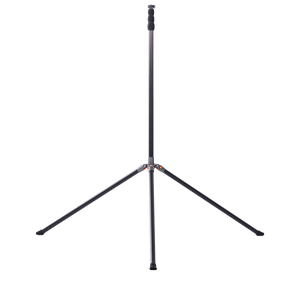
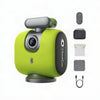
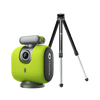
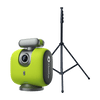
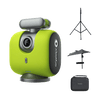
Blocking relies on timing and hand positioning that’s nearly impossible to self-correct without video. If your team records practices or matches with a system like the XbotGo Falcon — a standalone 4K AI camera that auto-tracks the play — you can review your penetration technique and blocking reads between sessions without needing a dedicated camera operator. It might be worth a look if your team is serious about getting reps right.

Offensive Systems
5-1 — One setter plays all six rotations. In the back row, the setter sets; in the front row, they still set. This means five attackers are available when the setter is in the back row, but only four when they’re in the front row. The most common system at high-level play.
6-2 — Two players serve as setters. Each one sets when they’re in the back row and attacks from the front row. This keeps three front-row hitters available at all times, but requires two elite setters.
4-2 — Two setters always play opposite each other in rotation, each setting when in the front row. Simpler to run, common in youth and beginner leagues.
Back-Row Attack — When a back-row player takes off from behind the attack line and hits the ball. The player must jump from behind the three-meter line — landing in front of it is fine.

Scoring and Game Terms
Rally — A single point played from serve to when the ball hits the floor (or a fault occurs). Under rally scoring, one team wins a point on every rally regardless of who served.
Rally Scoring — The current scoring system used worldwide. Every rally produces a point. Adopted internationally in 1999 after decades of “side-out scoring,” where only the serving team could score.
Side Out — When the receiving team wins the rally and gains the right to serve next.
Rotation — After winning a serve, all six players rotate clockwise one position. This ensures every player serves and plays every zone over the course of a set.
Hitting Percentage — The standard measure of attacker efficiency: (Kills − Errors) ÷ Total Attempts. A .300 hitting percentage is excellent at most levels.
Volleyball Slang
Every gym has its own vocabulary. These are the terms you’ll actually hear.
Pancake — A last-resort dig where you slide your flat hand along the floor and let the ball bounce off the back of it. It looks desperate. It often works.
Campfire — When a ball drops untouched to the floor between two players, both of whom assumed the other would take it. Nobody called it.
Six-Pack — When a block sends the ball directly into the attacker’s face. Painful for one person, memorable for everyone else.
Married — When two blockers are perfectly synchronized — jumping, timing, and hand placement in sync. “Those two are married at the net.”
Jedi Defense — A one-armed, fully-extended dig that saves a ball nobody should have reached. The Hail Mary of defensive plays.
Roof — A synonym for a clean stuff block. “She got roofed” means the attacker had their spike deflected straight down.
Dime — A perfect pass that lands exactly on the setter’s target. Also called “nailing it.”
Wall — A phrase for an impenetrable block. “You can’t get through that wall today.”
Closing
Volleyball has its own language, and learning it is part of learning the game. You don’t need to memorize every term at once — pick up the ones your team uses in practice, and the rest fill in naturally. The more you play, the more the vocabulary just becomes how you think about the court. Start with the positions, learn the three-contact sequence, and everything else will click from there.