

XbotGo Falcon

How to Read Your 3-2 Zone Defense on Film?
Most basketball coaches have drawn 3-2 zone defense rotations on a whiteboard. Plenty of teams still blow the same assignment the next game.
The gap between diagram and execution isn’t about understanding — it’s about seeing. Players know the scheme. They miss rotations anyway. The fix isn’t more whiteboard time. It’s watching film and showing players what correct and broken positioning actually looks like, possession by possession.
This guide covers the 3-2 zone defense basics and what to look for when you sit down to review footage.

What Is the 3-2 Zone Defense?
Three defenders cover the perimeter from the free-throw line (a middle “rover” plus two wings). Two defenders protect the paint near the baseline. The zone is built to deny high-post entries, guard the low blocks, and force outside shooting from spots the offense isn’t comfortable with.
It works best against teams with weak perimeter shooting. Against good three-point shooters — especially from the top of the key — it’s exposed, because the rover can’t deny the high post and guard a shooter 22 feet out at the same time.
Worth knowing: a lot of coaches running what they think is a 3-2 are actually running a 1-2-2. The difference is the middle defender’s positioning. In the 3-2, the rover drops to the free-throw line to deny the high post. In the 1-2-2, that player pressures the ball handler at the top. The rotations are completely different.

The 4 Principles Behind Every 3-2 Zone Rotation
Zone defenses fall apart when players freelance. These four principles frame every rotation — and serve as your film checklist:
- Force the offense to one side. Push the ball handler toward their weak hand. If offense is operating through the center of the defense, the zone is already broken.
- Prevent penetration into the key. Drives get guided toward the middle where help is stacked — never allowed to go baseline unchallenged.
- Force the lowest-percentage shot. A corner three from correct defensive pressure is acceptable. A corner three from a skip pass nobody closed out on is a breakdown.
- Rebound. Two bigs are always near the basket. The 3-2’s rebounding structure is a genuine advantage — but only if post players hold position after forcing a miss.

What Good 3-2 Positioning Looks Like on Film
Here’s what to verify by role:
Rover: At the free-throw line with arms wide, moving proactively with each pass — not reacting after the fact. When the ball goes to the corner, the rover reads the passer’s eyes to cover the wing outlet.
Wings: Hard-denying the wing passing lane, not sagging toward the paint. When the ball reaches the corner, the strong-side wing drops into the driving gap or denies the reversal pass. Both are valid — the choice depends on who has the ball, but it has to be a deliberate decision.
Posts: Fronting the low post when the ball is on the wing, not standing behind. Fronting is what allows a post to close out on a corner pass quickly. Standing behind the offensive player means arriving too late.
One specific moment to freeze-frame on film: the instant a skip pass is released. Where is the nearest perimeter defender? If they haven’t started moving before the ball leaves the passer’s hand, the corner shot will arrive ahead of the rotation.

5 Common 3-2 Zone Breakdowns Visible on Replay
Zone breakdowns are almost never random. You’ll see the same mistake repeat across multiple possessions once you know what to look for.
1. Early corner cheat. The ball-side post drifts toward the corner before the ball arrives on the wing. This leaves the block uncovered and invites a post entry. Watch the post defender’s feet — are they already cheating baseline while the wing still has the ball?
2. Rover beaten high. When an offensive player sets up at the high post elbow, the rover faces a conflict. Players who haven’t practiced this read either commit too early or freeze. Look for possessions where the high-post entry pass is uncontested.
3. Wings not sinking on ball reversal. When the ball goes to the corner, the weak-side wing should drop toward the middle of the key. Players who stay wide leave the lane open for a backdoor cut or a mismatch drive. This is one of the most common 3-2 zone defense errors at the youth and high school level.
4. Corner trap that doesn’t close. A well-executed corner trap is a great play. One where a defender arrives half a second late — with the baseline still open — creates a layup. Both trappers need to arrive together. Film makes the timing visible.
5. Rebounding triangle missed after a skip pass. When the defense scrambles to close out on a skip pass, post players sometimes follow the ball with their eyes instead of boxing out. Watch the two seconds after any skip pass — do the posts hold the paint, or are they watching the shot?
How to Run a Film Session That Actually Fixes Zone Problems
Film review only works if players stay in it. Three things that make a difference:
Review film as staff first. Identify one possession where the zone held and two where it broke the same way before showing anything to players. Comparing good and bad versions of the same rotation teaches faster than showing failures alone.
Label what you’re looking for before playing the clip. “Watch where X5’s feet are when the ball hits the wing.” Players directed to a specific read retain it better than players asked to spot the problem after the fact.
One fix per session. Find the most common breakdown from the last game. Spend 10 minutes on it. End with a drill that addresses the positioning error before leaving the room. If you want a more systematic process — tagging possessions by ball position, building playlists by player.
Getting usable zone defense footage used to mean finding someone to run a camera reliably from the right angle. If the shot is too tight or too close to the action, you lose visibility on the weak-side post — exactly where 3-2 breakdowns start.
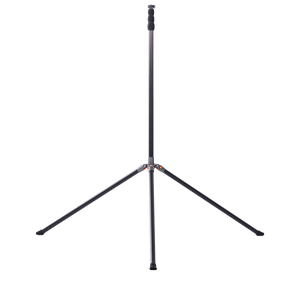
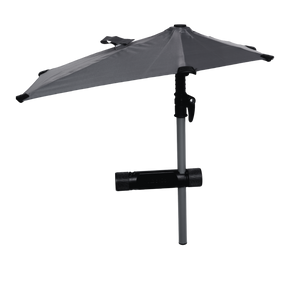
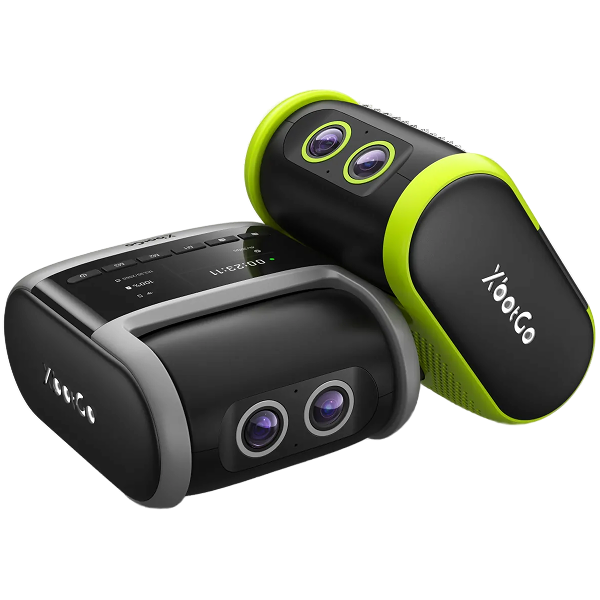
The XbotGo Falcon mounts at half-court height and auto-tracks a 4K wide-angle view of the entire half-court. All five defensive positions are visible in every frame, so you can spot every rotation error — not just the one closest to the ball. No cameraman, no missed angles, no setup headaches.

A Simple Weekly Routine
You don’t need an analytics staff. This fits in under 25 minutes:
Monday (15 min, staff only): Watch last game’s zone possessions. Find the single most common breakdown.
Tuesday (10 min, team): Show three clips — one where the zone held, two where it broke the same way. Name the fix in one sentence. Give players one positioning cue to practice that day.
The PGC Basketball post-game review process lays out a more detailed version with quarter-by-quarter tracking if you want to build a more structured film culture over a full season.
Putting It Together
Three up top, two in the paint, four rotation principles, and a specific read at each ball position. What makes the 3-2 zone defense hard isn’t the design — it’s five players executing the right rotation at the right moment against an offense looking for the seam.
Film is how coaches close that gap. Watch the rover. Watch the weak-side wing. Freeze-frame the skip pass. Once you know where to look, the breakdown chain almost always starts in the same spot — and that’s a problem one focused film session can actually fix.