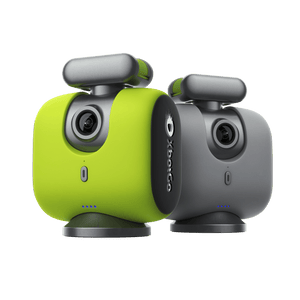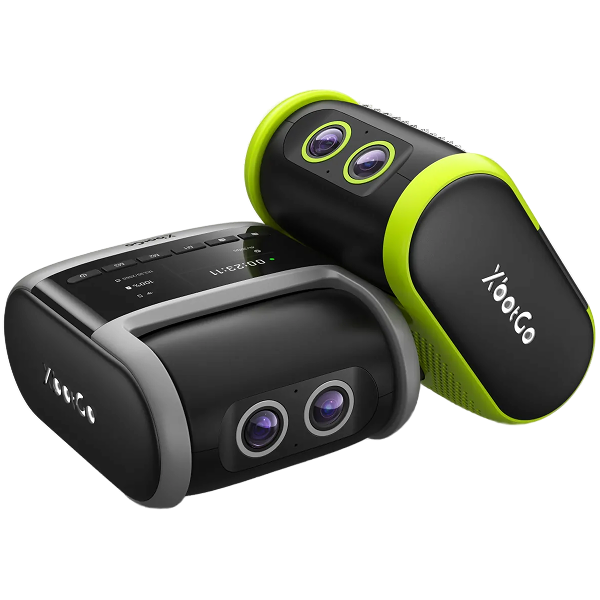


XbotGo Falcon

Optical vs Digital Zoom: Stop Ruining Your Sports Videos
You're on the sidelines, phone in hand, watching your daughter make a break toward the goal. You pinch to zoom in—and the moment you review the footage later, your heart sinks. The image is blurry, pixelated, and nothing like what you saw with your own eyes.
Sound familiar? The culprit is likely digital zoom, and understanding the difference between it and optical zoom could transform your sports recording game.

The Simple Truth About How Zoom Really Works
Let me cut through the marketing jargon. There are two fundamentally different ways cameras zoom in on distant subjects, and they're about as similar as a telescope and a magnifying glass.
Optical zoom uses physical glass lens elements that move back and forth, actually changing the focal length of your camera. Think of it like a telescope—the glass brings distant objects closer before the image reaches your camera's sensor.
Digital zoom, on the other hand, is essentially software trickery. The camera crops the center of your image and enlarges those remaining pixels to fill the frame.
Why This Matters When You're Filming Sports
Here's where things get real for those of us capturing youth games and athletic performances.
The Distance Problem
When filming a soccer match from the sidelines, you might be 50-100 feet from the action on the opposite side of the field. Real-world testing shows that a 2x optical zoom makes a subject at 1,000 feet appear only 500 feet away. At 10x optical zoom, that same subject looks just 100 feet away—and the image stays sharp.
Try that with digital zoom, and you'll see why YouTube comparisons consistently demonstrate that beyond moderate magnification levels, digital zoom produces noticeably degraded results.
The Moving Subject Challenge
Sports photography presents unique challenges. Fast-moving athletes, unpredictable plays, and constantly changing distances demand reliable, consistent quality.
Reddit users consistently complain about "shutter lag with moving objects like a pet"—and if your camera struggles with a dog, imagine the challenge of tracking a basketball player driving to the hoop or a midfielder sprinting downfield.

What Smartphone Manufacturers Don't Tell You
Modern smartphones have become incredibly sophisticated, and that's both good and bad news for sports parents.
The Multi-Lens Reality
Your phone likely has multiple cameras—perhaps a wide-angle, normal, and telephoto lens. When you tap "3x zoom," you might think you're using optical zoom. Sometimes you are. But here's the catch: those different lenses often have different sensor qualities.
As photography communities point out, the telephoto and portrait cameras typically have "worse sensors than the main camera." Even worse? Between those fixed zoom levels—say, when you're at 5x or 7x—you're getting cropped, digitally zoomed footage with reduced quality.
The AI Processing Advantage (and Limitation)
To be fair, smartphone manufacturers have made impressive strides. Modern phones like Google Pixel and iPhone use computational photography that combines multiple frames instantly, applies AI-based sharpening, and can produce digital zoom results that rival simple optical zoom in certain conditions.
But there's a limit. As photography experts note, "If a camera offers 20x digital zoom, that also means it offers 20x worse image quality."
The Sports Videography Dilemma: Quality vs Convenience
Here's what I've learned from years of filming sports: you need three things working together—distance coverage, quality consistency, and intelligent tracking.
Distance Coverage
Most sports happen at distances that make wide-angle smartphone lenses impractical. A soccer field is roughly 300 feet long. From midfield, players at either goal are 150 feet away—and that's assuming you can even stand at midfield.
Research from security camera applications shows that optical zoom maintains clarity for license plate recognition from 470+ feet. That same principle applies when you're trying to read jersey numbers or capture facial expressions during crucial game moments.
Quality Consistency
When you're recording a full game or creating highlight reels, you need consistent quality throughout. The smartphone approach of switching between different sensors creates visible quality variations that become painfully obvious when you're editing footage later.
Intelligent Tracking
This is where technology gets fascinating. While smartphones have decent autofocus, they weren't designed to understand sports scenarios—recognizing formations, predicting player movement, or adjusting framing based on game dynamics.

Breaking the Traditional Trade-Off
For years, the choice was simple: use a smartphone for convenience despite quality limitations, or haul out expensive DSLR equipment with interchangeable lenses for professional results.
The AI Sports Camera Revolution
Recent technological advances have created a third option that combines optical zoom quality with AI-powered automation. Professional sports cameras now integrate true optical zoom with sport-specific intelligence, solving problems that have plagued both smartphones and traditional cameras.
Consider what happens during a fast break in basketball or a counterattack in soccer. Traditional cameras require manual operation—someone physically panning, zooming, and framing. Smartphones offer automatic tracking but compromise on zoom quality.
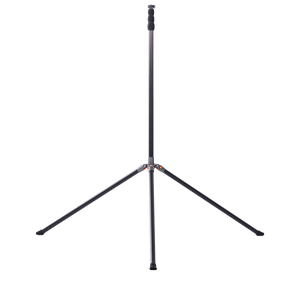
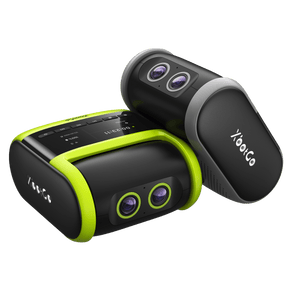
The breakthrough comes from AI-powered optical zoom systems that understand sports contexts. For example, the XbotGo Falcon represents this evolution—a dedicated sports camera with true 4K recording, built-in Sony sensor, and AI that runs 20+ deep learning tasks simultaneously to make intelligent zoom decisions in real-time.
These systems can:
- Maintain optical zoom quality while automatically tracking players
- Adjust framing dynamically based on game situations (pulling in for breakaways, widening for set pieces)
- Follow specific jersey numbers through crowded gameplay
- Create cinematic transitions without manual operation

Practical Recommendations for Sports Parents and Coaches
Based on comprehensive research across professional sources and user experiences, here's what actually works:
If You're Using a Smartphone
Do this:
- Stick to your phone's optical zoom limits (usually 2-3x, sometimes up to 10x on premium models)
- Shoot at highest resolution available
- Position yourself closer to the action when possible—physical positioning beats any zoom technology
Avoid this:
- Pinch-to-zoom beyond your phone's optical range
- Relying on 30x, 50x, or 100x "super zoom" marketing claims
- Expecting consistent quality when switching between zoom levels mid-game
If You're Serious About Sports Documentation
Consider these factors:
- True optical zoom capability: Look for specifications showing actual focal length ranges, not just "zoom factor" marketing
- AI tracking integration: Sport-specific intelligence matters more than generic autofocus
- Single-sensor consistency: Avoid systems that switch between different sensors at different zoom levels
- Live streaming quality: Optical zoom maintains broadcast quality that digital zoom cannot match
The Recording Workflow That Works
Here's the approach I've found most effective:
- Set up with optimal zoom range in mind—plan your position based on expected action zones
- Use maximum optical zoom for your equipment without entering digital territory
- Let AI handle the tracking if available, maintaining that optical zoom quality
- Crop or adjust in post-production if you need tighter framing for specific highlights
When Image Quality Really Matters
You might wonder whether these technical differences actually matter for youth sports recordings. Let me share when they absolutely do:
College recruitment videos require professional quality. Coaches and scouts will judge both athletic performance and video clarity. Pixelated footage from excessive digital zoom can cost athletes opportunities.
Team analysis and coaching depend on seeing details—foot positioning, hand placement, tactical formations. Digital zoom's quality loss can obscure the very details coaches need to evaluate.
Memory preservation means creating footage you'll value for decades. Those grainy, heavily digitally-zoomed videos won't age well, and you can't recreate those moments.
The Bottom Line
Research consistently shows that optical zoom preserves quality that digital zoom cannot replicate. While AI has improved smartphone capabilities, physics still favors true optical magnification for professional sports recording.
For sports parents and coaches, this choice is critical. The combination of optical zoom with AI tracking—like in dedicated sports cameras such as the XbotGo Falcon—represents today's optimal solution: quality optics with automated convenience.
Stop settling for pixelated memories. Your athletes' achievements deserve footage as impressive as their performance.
Ready to upgrade your sports recording game? Understanding these technical differences is your first step toward capturing those crucial moments with the clarity they deserve.