

XbotGo Falcon

What Is the FIFA World Cup? Format, History & 2026 Winner
The FIFA World Cup is the biggest sporting event on the planet. Every four years, 48 national soccer teams from around the world compete over a month-long tournament to crown one global champion. The 2026 final, in which Spain beat Argentina 1–0 in New Jersey, drew the largest U.S. audience the tournament has ever recorded; the 2022 final between Argentina and France remains the most-watched soccer match in history at 1.42 billion viewers.
It’s not the Super Bowl. It’s not the Olympics. It’s something else entirely.
Here’s what you need to know: what the World Cup is, how it works, who has dominated it, and what changed when it arrived in the United States, Canada, and Mexico in 2026.

A Tournament Born From a Gold Medal
The FIFA World Cup started in 1930 — but the idea formed two years earlier.
At the 1928 Summer Olympics, Uruguay’s national team came out of nowhere to win gold in soccer. FIFA president Jules Rimet watched that upset and decided the sport deserved its own global championship. Uruguay volunteered to host. Thirteen teams made the trip across the Atlantic. Uruguay won again, beating Argentina 4-2 in the first-ever final.
The tournament has run every four years since, with gaps only in 1942 and 1946, when World War II made international competition impossible. Through 23 editions, only eight countries have ever lifted the trophy.
How the FIFA World Cup Works
The World Cup has two phases: qualification and the final tournament.
Qualification starts roughly three years before the event. Every FIFA member nation competes within their continental federation — UEFA in Europe, CONMEBOL in South America, CAF in Africa, and others. Each federation runs its own qualifying competition to determine which teams earn a spot. The host country qualifies automatically.
The group stage opens the final tournament. Since the 2026 expansion, the 48 teams are drawn into 12 groups of four. Each team plays the other three in its group once — a round-robin format. Wins earn three points, draws earn one, losses zero. The top two from each group advance, along with the eight best third-place finishers. That gives 32 teams in the knockout bracket.
The knockout rounds run from there. Single elimination. Win and advance, lose and you’re done — regardless of how well you played in the group stage. The bracket runs: Round of 32 → Round of 16 → Quarterfinals → Semifinals → Final. If a knockout match is tied after 90 minutes, teams play 30 minutes of extra time. Still level? A penalty shootout decides it. Winning the whole thing now takes eight games, one more than under the old 32-team format.
At the end of the tournament, FIFA awards the Golden Ball (best player), the Golden Boot (top scorer), and the Golden Glove (best goalkeeper). In 2026 those went to Spain’s Rodri, France’s Kylian Mbappé, and Spain’s Unai Simón respectively.
Who Has Won the Most?
Eight nations have ever won the World Cup.
Brazil leads with five titles — 1958, 1962, 1970, 1994, and 2002. They’re also the only country to have qualified for every single World Cup ever held. Germany and Italy follow with four titles each. Argentina holds three, the most recent at Qatar 2022 — Lionel Messi’s long-awaited championship, widely considered one of the greatest individual moments in soccer history.
Spain, France, and Uruguay have each won twice, and England once. Spain are the reigning champions, having beaten Argentina 1–0 after extra time in the 2026 final at MetLife Stadium — sixteen years after their first title in 2010.
On the individual side, France’s Kylian Mbappé holds the career scoring record with 22 World Cup goals. He passed Lionel Messi during the 2026 third-place playoff; both had already moved clear of Germany’s Miroslav Klose, whose mark of 16 had stood since 2014. France’s Just Fontaine still holds the single-tournament record with 13 goals in 1958 — a mark that has stood for 68 years.

Why the World Cup Feels Different
There’s club soccer — the Champions League, the Premier League, La Liga — and then there’s the World Cup. They are not the same thing.
In club soccer, players compete for their team’s contract. In the World Cup, they compete for their country. Messi can’t join France. Mbappé can’t suit up for Brazil. Every player on the field represents the nation they were born in, and that distinction changes everything.
The four-year gap makes each edition feel like a once-in-a-generation moment — because for many players, it is. Most careers allow for two or three chances. Some legends never make a final. That scarcity creates pressure no club match can replicate.
FIFA’s official global engagement report for Qatar 2022 counted 5 billion total engagements across TV, digital, and social. The 2026 edition pushed past it in the United States, where the semifinals became the most-watched in the country’s history and the final drew 22.6 million viewers across Telemundo and Peacock. Even people who don’t follow soccer tune in for the final.
What Changed in 2026
The 2026 FIFA World Cup was the largest in tournament history.
For the first time, three nations co-hosted: the United States, Canada, and Mexico. The tournament ran June 11 to July 19, 2026, with the final at MetLife Stadium in New Jersey. Full host city and result details are on the official 2026 World Cup page.
The biggest structural change was the field size. The tournament expanded from 32 to 48 teams — the first expansion since 1998. The new format uses 12 groups of four, with the top two from each group advancing along with the eight best third-place finishers. That created a new Round of 32 before the traditional knockout bracket begins, taking the tournament from 64 matches to 104 across 39 days. Total attendance topped 6.8 million.
The prize fund hit a record $655 million, with the winning team taking home $50 million and teams eliminated in the group stage receiving $9 million each.

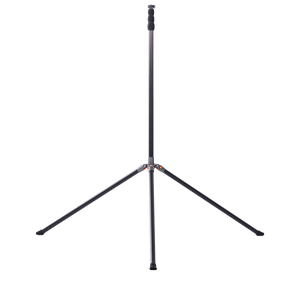
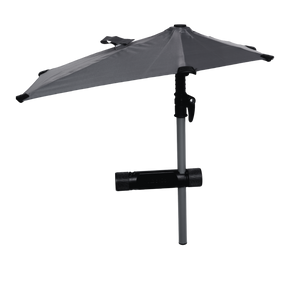
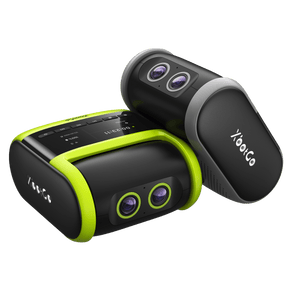
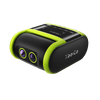
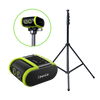
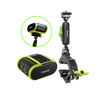
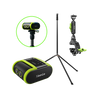
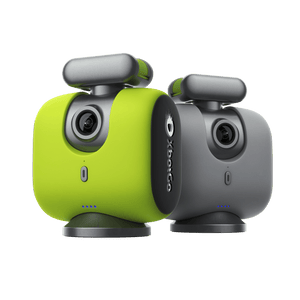
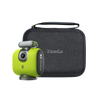
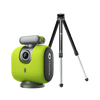
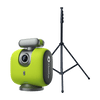
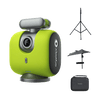
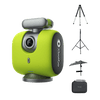
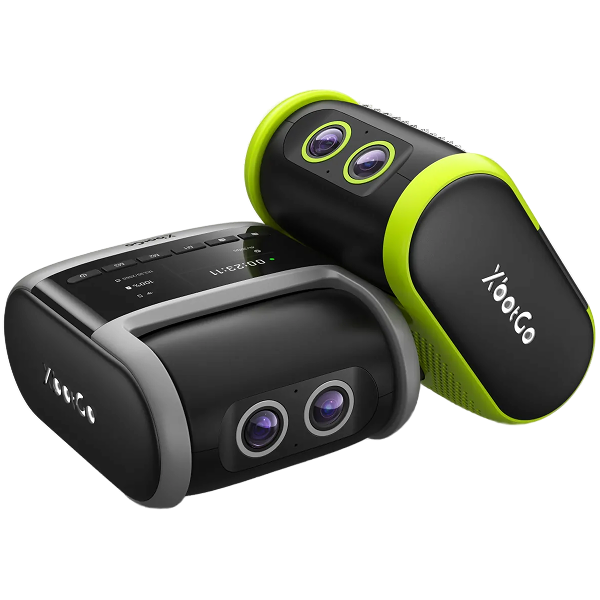
If the World Cup has you fired up about developing your youth soccer team, game film is one of the fastest ways to improve player performance. The XbotGo Falcon is a standalone 4K AI camera that auto-tracks player movement across the field without needing anyone behind the lens — so coaches can stay focused on the game, not the recording. It brings professional-level film analysis down to the youth level.
Frequently Asked Questions
How often is the FIFA World Cup? Every four years. The most recent edition was 2026, co-hosted by the United States, Canada, and Mexico. The next is in 2030, hosted by Spain, Portugal, and Morocco, with centenary opening matches in Uruguay, Argentina, and Paraguay.
How many teams play in the World Cup? 48, following the expansion that took effect at the 2026 tournament. Every edition from 1998 through 2022 had 32.
Who won the 2026 World Cup? Spain, beating Argentina 1–0 after extra time at MetLife Stadium on July 19, 2026. Ferran Torres scored the only goal in the 106th minute. It was Spain’s second title.
Which country has won the most World Cups? Brazil, with five titles. They’re also the only nation to have appeared in every World Cup.
Is the Women’s World Cup the same tournament? No. The FIFA Women’s World Cup is a separate event, also held every four years. The 2023 edition in Australia and New Zealand was the first with 32 teams.
The Bottom Line
The FIFA World Cup is a month-long tournament held every four years where national teams compete for the most recognized trophy in soccer. It started in 1930 with 13 teams and has grown into a global event of 48 nations. Brazil has won five times. Spain are the current champions, having won their second title on North American soil in 2026 — the first time the tournament had been staged there in 32 years. Next stop: Spain, Portugal, and Morocco in 2030.