

 Chameleon


XbotGo Falcon

7 Basketball Drills for Kids That Actually Keep Them Engaged
Most kids who stop playing basketball don’t quit because they lack talent. They quit because practice felt like homework.
Basketball drills for kids fail when they look like drills. Line up, wait your turn, take two dribbles, get back in line. Within five minutes, kids are chasing each other and nobody’s learning anything. The fix isn’t stricter discipline — it’s better drill design.
The best youth coaches build drills that feel like games. Competitive, fast, and fun enough that kids ask to run them again. Here are seven drills that do exactly that, split by age.

The One Rule That Makes Any Drill Work
Before the specific drills, one principle matters more than any of them: every player should be moving at all times.
Lines are the enemy. The YMCA’s official practice guidance states each drill should run no more than 5–10 minutes with all players active simultaneously. Players who wait their turn lose focus, get bored, and make trouble. Keep everyone moving and you’ve solved half the coaching problem before running a single drill.
Drills for Ages 5–8: Skills Disguised as Games
Youth basketball drills for this age group work best when kids don’t realize they’re learning. They learn by doing — especially when doing feels like competing. Each drill below has a winner, a score, or a story. That’s not a workaround; it’s how young players’ brains are wired.

Sharks and Minnows
Every player (the minnows) dribbles across the court while one or two sharks try to knock their ball away. Lose your dribble or step out of bounds: you become a shark. Last minnow still dribbling wins.
This drill shows up in nearly every experienced coach’s toolkit for ages 5–9. It builds ball protection, spatial awareness, and the habit of keeping the dribble alive — all while kids are laughing and competing at full speed.
Red Light, Green Light
Green = speed dribble forward. Yellow = slow down. Red = jump stop into triple threat position. Add colors for variety: orange might mean five quick dribbles in place, blue might mean crossover.
The jump stop is a fundamental that pays dividends for years. Burying it inside a game kids already know makes it stick faster than any lecture.
Gimme Five
Everyone dribbles around the court, giving high-fives to as many teammates as possible — using only the non-dribbling hand. Run it for 30 seconds, count the high-fives, and try to beat the score next round.
It’s silly. Kids love it. And it forces exactly the right habit: dribbling without staring at the ball.
Drills for Ages 8–12: Add Defenders, Add Decisions
Players this age are ready for complexity. They can handle live pressure, competition, and basic one-on-one situations. The key shift: basketball drills for kids at this level should require reading and reacting, not just repeating a sequence.

Dribble Knockout
Everyone dribbles inside the three-point arc. Protect your own dribble while trying to knock others’ balls out. Last player dribbling wins. Short rounds, maximum intensity.
This teaches players to change speed and direction under live pressure — something no isolated cone drill can replicate. Players discover their own instincts rather than copying a choreographed move.
Two-Dribble Limit Scrimmage
Regular scrimmage, one rule: each player gets two dribbles before they must pass or shoot. Any extra dribbling is a turnover.
This cures ball-hogging faster than any lecture. It forces passing, spacing, and genuine decision-making. Players who normally coast on the wing suddenly have to get open.
The Animal Drill
Two teams line up on opposite baselines. Each player has a number. Coach tosses the ball into the air and calls a number — the two matching players race for it. Whoever gets it attacks the basket; the other plays defense. First team to five baskets wins the round.
This one drill develops hustle, finishing, defense, rebounding, and live decision-making in a single competitive format. Call multiple numbers at once to scale it from 1-on-1 up to 3-on-3.
Modified Mikan Drill
Stand close to the basket. Alternate right and left-hand layups, staying tight to the glass and using the backboard. Move back one step only after making five in a row.
The Mikan Drill has been training elite finishers for decades. The youth modification: start nearly under the basket, lower the rim if possible, and prioritize correct footwork over power. Proper mechanics at close range build muscle memory that carries into longer attempts.
How Long Should Kids Practice?
More practice isn’t always better — especially for young players. NBA and USA Basketball officially recommend that players ages 7–8 practice no more than 30–60 minutes per session, one to two times per week. For ages 9–11, that extends to 45–75 minutes.
USA Basketball’s national curriculum uses a 70:30 training-to-competition ratio for players ages 8–12 — meaning 70% of practice time goes to skill work and drills, 30% to competitive scrimmage. Keep sessions short, active, and varied.

Don’t Miss the Moments That Matter
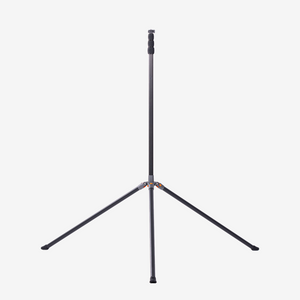
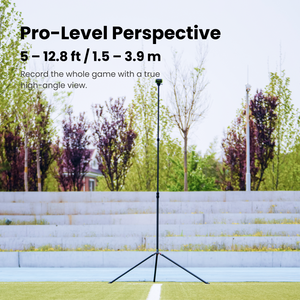
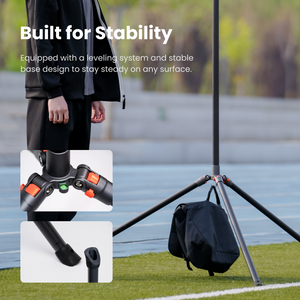
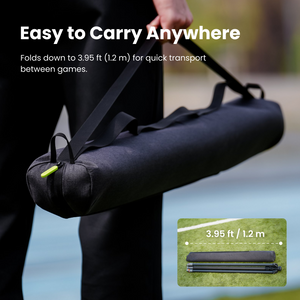
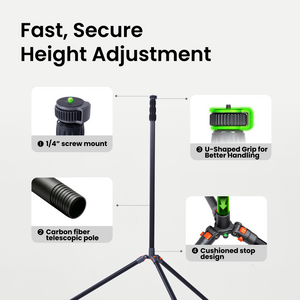
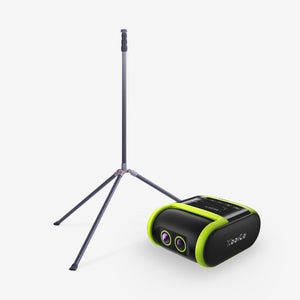
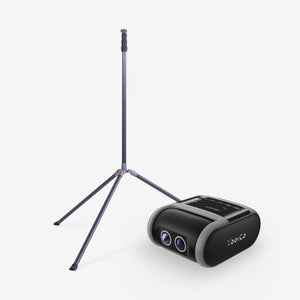
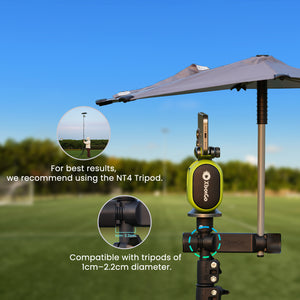
When the skills built in kids basketball practice start showing up in real competitions, those are the moments worth watching. If you’re tired of missing the live action while fumbling with your phone on the sideline, the XbotGo Falcon might be worth a look. It’s an AI camera that automatically tracks players throughout a game — set it on a tripod, step away, and get 4K footage of the full competition without missing a single thrilling moment in the bleachers.

Good basketball drills for kids come down to one thing: making the sport feel worth learning. The drills above do that. Mix the age-appropriate ones into your practices, keep every player moving, and trust the process — the skills always follow the fun.

XbotGo Chameleon - Cámara deportiva con IA
Captura cada momento con el seguimiento basado en inteligencia artificial. Perfecto para entrenadores, padres y deportistas que desean obtener imágenes perfectas sin necesidad de grabar manualmente.