

 Chameleon


XbotGo Falcon

7 Basketball Shooting Drills That Build a Game-Ready Shot
Most players put in the reps. They show up, shoot for an hour, and go home. Then game day comes and the shot falls apart. The problem usually isn’t effort. It’s the drills.
The basketball shooting drills that carry over to games are the ones that match how shots actually arrive — off movement, with tired legs, under pressure. Here are seven drills that build exactly that kind of shot.

1. Form Shooting From Close Range
Before range, before speed, you need to fix horizontal variance. A shot that misses left or right has a mechanics problem. One that misses long or short just needs a leg adjustment.
Start within 5 feet of the basket. Use your shooting hand only. Don’t count shots that clip the rim — only pure swishes. Make three in a row, then step back six inches. If you miss, move one step forward. The goal is three consecutive net-only makes from behind the three-point line.
This is the arch drill. It’s slow on purpose. You’re training precision first, and everything else builds on that.
2. Catch-and-Shoot Sprint Drill

Most shooting drills train a perfect, stationary catch. That almost never happens in a real game.
Toss the ball 10–15 feet in any direction. Sprint to it. Catch off the run and go straight up to shoot. Deliberately vary the toss — too high, too far, off-angle. Your feet won’t be perfect. That’s the point.
Players who only practice from a clean standstill often struggle when they catch off a screen or a fast-break pass. This drill trains the habit of loading your hips and releasing quickly even when the ball arrives imperfectly.
3. Spin-Out Shooting
Set up at the three-point arc. Spin the ball forward — left, right, or straight ahead. Chase it, catch it, and shoot immediately.
The cue here is ground contact time. The moment the ball reaches your hands, your feet should already be loading to spring. Pause and you lose the separation window.
Work the entire arc, changing direction on every rep. This drill builds the no-hesitation release habit that makes fast shooters fast.
4. The 3-Swishes Spot Drill

Pick a spot on the court. Your goal is three consecutive swishes from that spot — clean, rim-free — before you move to the next one.
Missing resets your count. You stay until you hit the streak.
One player described it this way: “Making the shot is no longer the issue — it’s expected. Eventually you get pissed enough and your brain just figures it out.” That’s exactly what this drill is designed to do. Accountability-based practice accelerates learning faster than casual repetition.
5. One-Dribble Pull-Up
The pull-up jumper is the fastest-growing shot in basketball. Teams in the 2024–25 NBA season are taking 42.4% of their shots from three-point range — an all-time high — and pull-up three-pointers rose 13% year-over-year in the same season. That shift filters down to every level of the game.
Start in a triple-threat stance. Use a cone to represent a defender. Rip past it, but commit: go either low (below knee level) or high (over the shoulder). Never float in the middle — that’s where the deflection happens. Take one dribble, gather, and shoot.
Repeat from both sides. Once the mid-range version feels automatic, move the cone back and pull up from three.
6. Fatigue Shooting
Here’s the part most players skip: shooting under tired legs.
A 2025 study in Frontiers in Physiology found that moderate physical fatigue reduces two-point shooting accuracy by roughly 7%. Most players practice only when they’re fresh. That gap shows up in the fourth quarter.
After any conditioning work — sprints, defensive slides, box-out drills — immediately take 10 shots without resting. Notice where your form breaks down. That’s the version of your shot that matters in a close game.

7. Free Throws Under Pressure
Finish every practice session with free throws. Not as a cool-down — as a test.
Do a set of sprints or a conditioning drill, then step to the line immediately and shoot 10. Set a standard: if you miss more than three, you run again before the next set. This creates the same physical and cognitive pressure as a late-game free throw, when your body is already working and the outcome matters.
Research on free-throw attention under pressure confirms that skill-level differences are most visible under fatigue and pressure — not when players are fresh. Train specifically for that condition.
Review Every Rep
The drills above only work if you can see what’s actually happening with your shot. Most players don’t know if their elbow is flying out, their weight is drifting, or their release is inconsistent under fatigue — because they can’t see it.
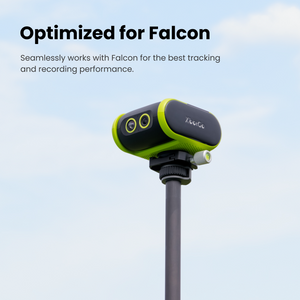
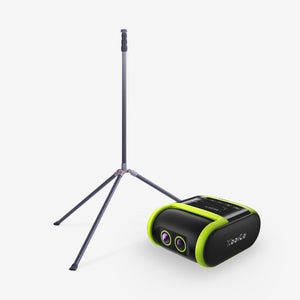
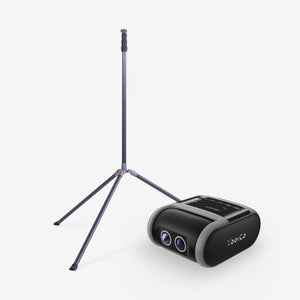
The XbotGo Falcon is a standalone 4K AI camera that follows the player automatically and records every shooting rep. No phone setup, no tripod adjustments. It just runs. After a session, you watch the footage and catch what you couldn’t feel: the release that changes under fatigue, the foot alignment that shifts on pull-ups, the follow-through that drops off in drill six but not drill two. Seeing those patterns is what turns a workout into a correction.

Build Your Shooting Routine
These seven basketball shooting drills cover the full range — form mechanics, game-speed reactions, shot creation, and pressure situations. You don’t have to run all of them in a single session.
A practical solo structure: start with 15 minutes of form shooting and spin-outs to groove your mechanics. Move into catch-and-shoot sprints and pull-ups for 20 minutes. Close with fatigue shooting and free throws under pressure. Track your makes — not just your attempts. Accountability is what separates a productive practice from just putting up shots.

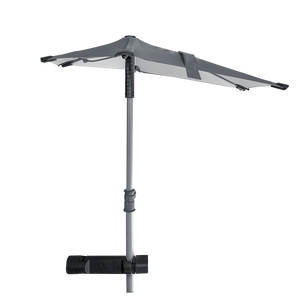
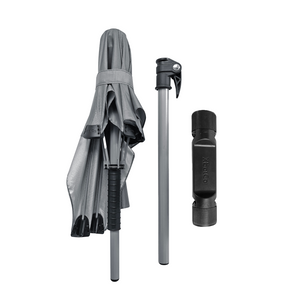
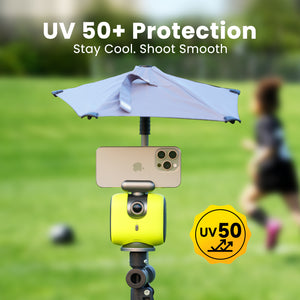
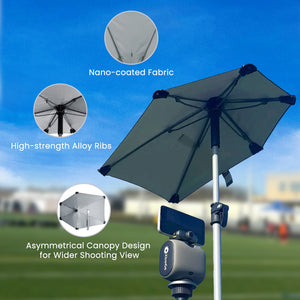
XbotGo Chameleon - Cámara deportiva con IA
Captura cada momento con el seguimiento basado en inteligencia artificial. Perfecto para entrenadores, padres y deportistas que desean obtener imágenes perfectas sin necesidad de grabar manualmente.