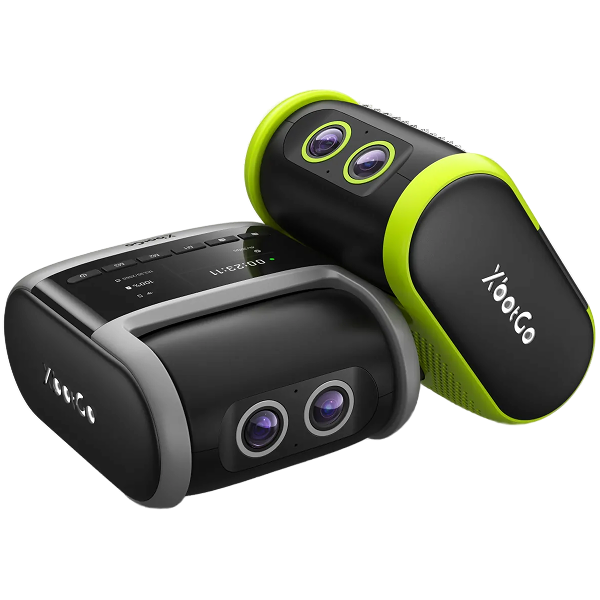


XbotGo Falcon

7 Best Soccer Cameras for Recording Games (2026)
Your child scores the game-winning goal while you're wrestling with your camera, trying to zoom and track the action. By the time you find them in the viewfinder, the moment is gone forever. Sound familiar?
You're not alone. Thousands of soccer families face the same choice every weekend: watch the game or film it. The good news is that you no longer have to pick. A generation of AI-powered soccer cameras now handles the panning, zooming, and framing on its own, so a parent can stand on the sideline and actually watch, while the camera does the filming.
This guide covers the seven soccer camera systems worth considering in 2026 — what each one actually does, who it suits, and where the real differences lie. If you have been searching for the best video camera to record soccer games, the honest answer has shifted: the best camera for recording soccer games is now usually an automated tracking system rather than a traditional camcorder, because filming a whole game by hand is the part nobody has time for.
Best Soccer Cameras in 2026: At a Glance
| Camera | How it tracks | Needs a phone? | Ongoing cost | Best for |
|---|---|---|---|---|
| XbotGo Falcon | Motorized lens physically follows play, live | No — standalone | No subscription for core recording, tracking, and streaming | Clubs, coaches, and travel teams filming every game |
| XbotGo Chameleon | Motorized mount turns your phone to follow play | Yes — phone is the camera | No subscription for core recording, tracking, and streaming | Families who already own a recent flagship phone |
| Trace | Fixed wide lens, following view built in software after the game | No | Subscription; camera is leased and returned | Parents who mainly want one player followed |
| Veo Cam 3 | Fixed dual lens records the full field, view generated afterwards | No | Annual platform subscription | Clubs that want event tagging and analysis built in |
| Pixellot Air NXT | Dual 12MP array, AI pans and zooms within the panorama | No | Platform subscription | Leagues and venues streaming many games |
| BallerCam | Wide lens on an iPhone, AI pans and zooms in software | Yes — iPhone 13 Pro or newer only | Cloud storage upgrades sold separately | Coaches with a spare iPhone who want to control the zoom |
| Reeplayer | AI auto-tracking with built-in cellular connectivity | No | Hardware purchase plus a required service plan | Clubs streaming from fields without Wi-Fi |
XbotGo Falcon — Best Standalone AI Soccer Camera
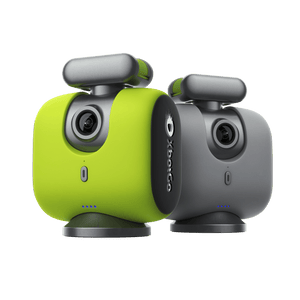
If you want to keep your phone in your pocket, the Falcon is the one to look at. It is fully standalone: mount it, power it on, and it records and tracks by itself, with no cameraman on the sideline.
What sets it apart is that it physically turns. A dual-camera system watches the whole field and the players at once, and an on-board AI processor drives the lens to follow play as it happens — so the framing is captured live rather than reconstructed from a wide shot afterwards. It records native 4K at up to 30fps, no cropping or stitching, across 360° of rotation and 160° of tilt.
It is IPX5 weather-resistant, so a wet Saturday is not a problem, and takes a microSD card up to 1TB — a full weekend tournament on one card. Free live streaming to YouTube and Facebook is built in, with 20GB of free cloud storage. Core recording, tracking, and streaming need no subscription: a one-time purchase with lifetime access. (AI Analysis is a separate upcoming add-on.)
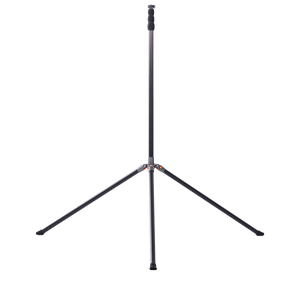
Budget separately for the microSD card, which is required and not included, and a tripod, which comes in the bundle packages.
XbotGo Chameleon — Best AI Soccer Camera If You Already Own a Good Phone
The Chameleon takes a different route to the same result: it turns the phone you already own into the camera. The unit is a motorized mount with its own AI co-processor — it does the tracking and the turning, your phone does the recording.
Because your phone is the sensor, image quality follows your phone's camera. It records up to 4K in team-sports modes, which is what soccer uses. Rotation is a full 360°, though tilt is a narrower ±15° than the Falcon's. Battery life is the longest here at around 8 hours — because it is not doing the recording.
The box includes a Bluetooth remote, which matters more than it sounds: if the AI drifts toward the sideline, you can nudge the framing back without walking to the tripod. Live streaming is free and unlimited, with the same 20GB of cloud storage and one-time purchase.
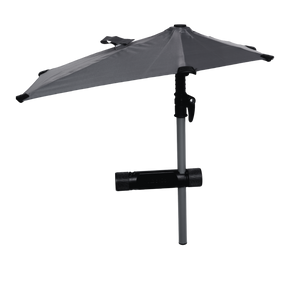
Worth knowing: it connects over Bluetooth, so a stream's internet comes from the phone itself. It carries no IP rating, so it is built for normal conditions rather than heavy rain — a separate Weather Guard Umbrella accessory covers that. Jersey-number tracking and AI auto-editing are currently basketball-mode features, not soccer ones.
Trace — Best for Following One Individual Player
Trace is built around a specific job: following your player rather than the team. Its camera records the full field through a fixed 180° lens, and the following view is generated in software afterwards — PlayerCam centres the footage on one player and zooms in, so a parent gets a personal edit rather than a wide team shot.
The commercial model is unusual and worth understanding before committing. The camera is leased rather than owned: annual plans include the rental at no extra cost, monthly plans charge a one-off rental fee, and the equipment goes back when the subscription ends. Seats are counted by email address, not by team — entry plans cover two, higher tiers four — so a squad typically ends up with several family subscriptions rather than one club account. The entry tier also keeps only your five most recent games; full archives sit on the higher tier.
The hardware ships with a 16ft tripod, sandbags, and a carrying case. Trace states on its own site that it currently serves the soccer market, with more sports planned.
If individual player highlights are the whole point for you, this is the system built around that.
Veo Cam 3 — The Club Standard

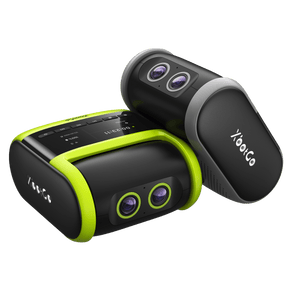
Veo is the camera you are most likely to see already mounted at a competitive youth tournament. It records the full field through fixed dual 4K lenses, then builds the following view and the analysis on its platform after the match — no one operates it, and there is no joystick.
Its real strength is what happens after the whistle. Veo's platform handles event detection, highlight generation, and clip sharing, which is the part of the workflow most coaches find tedious. You can switch angles, zoom into a moment, and review plays in a few clicks, and everything uploads to the cloud for the squad.
Setup is genuinely plug-and-play: no cabling, mount it and record. The camera is weatherproofed for outdoor use.
The thing to weigh is the structure of the cost. Veo works on an annual platform subscription on top of the hardware, so it is worth comparing the multi-year total against a one-time purchase — particularly for a club that films every week. It is also worth checking who holds the account: when a club owns the subscription, individual families may not be able to download their own footage.
Pixellot Air NXT — Best for Venue and League-Level Streaming
Pixellot sits at the infrastructure end of this list. The Air NXT is its portable model, built around a dual 12MP camera array that captures a panorama and lets the AI pan and zoom inside it rather than turning the camera. It supports multiple sports and adds stereo audio, which matters more than people expect when footage is being streamed to families at home.
Where it fits is volume. If you are covering a full slate of games across a venue or a league every weekend, Pixellot is designed for that scale, and many clubs encounter it through a state association or federation program rather than buying it directly.
Where it fits less well is a single family or a single team. It runs on a platform subscription, and the viewing experience is built around its own portal — which is fine for a league distributing games, less convenient for one parent who just wants the file. For a single travel team, the standalone cameras above are usually the simpler answer.
BallerCam — Best iPhone-Based Alternative
BallerCam, from the team behind BallerTV, is the closest direct comparison to the Chameleon: it is also a phone-based system. A housing with a wide-angle lens clips onto your iPhone, and the AI pans and zooms within that fixed 180° frame in software.
Two facts are worth having up front, because they decide whether it is an option at all. It does not include a camera — the iPhone is the camera, sold separately. And it works with iPhone 13 Pro and newer only, with no Android support, which is a narrower door than the Chameleon's iPhone-and-Android compatibility.
What coaches like is the web player: because the whole field is always captured, you can switch the AI follow off and pan or zoom anywhere yourself — useful for off-ball movement a following camera would have cropped out. The housing includes a cooling fan, which addresses the heat build-up an iPhone gets in direct sun, plus a hot-swappable battery.
One spec to read carefully: it captures 4K for the AI to work with, but the file you download is 1080p and the stream is 720p. Cloud storage comes as an allowance of hours, with more as a paid upgrade.
Reeplayer — Best for Fields Without Wi-Fi
Reeplayer solves a problem most of this list ignores: plenty of youth fields have no usable internet, which makes live streaming to a grandparent at home impossible. Reeplayer's camera has built-in cellular connectivity with a SIM and global data plan included, so it goes live from anywhere with a signal.
It records in 4K and outputs 1080p HD, tracks automatically, is weather-resistant, and holds up to around 30 games on board. Playback is available right after the match, and the plan covers unlimited games, teams, and users rather than splitting access into tiers — a genuine difference from systems that count seats by email address.
The structural point to understand is the cost model: the camera is a one-time hardware purchase, and a service plan is required on top of it. So unlike a one-time-purchase camera, the ongoing cost continues; unlike a pure lease, you also pay for the hardware upfront. Whether that trades well depends on how many teams share the one unit — and sharing is where it does best.
Final Thoughts
The right soccer camera depends far less on specifications than on two questions: does someone have to operate it, and does the cost stop when you have paid for it?
If you want the camera to work alone and the cost to end at purchase, the Falcon is the most complete answer here. If you already own a good phone and would rather spend less, the Chameleon gets you most of the way there. If your priority is one player rather than the team, Trace is designed for exactly that; and if you want the most developed post-match analysis platform, Veo remains the club standard.
Whichever way you go, the thing worth buying back is the ninety minutes you currently spend behind a viewfinder. For more on the wider category, see our overview of auto-tracking cameras for sports.