

XbotGo Falcon

Edge Computing Explained: Real-Time Data Processing Solutions
By 2025, over 41.6 billion IoT devices will generate 80 zettabytes of data annually—enough to fill 200 million laptops with data every single day. That staggering volume creates a critical challenge: traditional cloud computing simply can't handle the bandwidth demands, latency requirements, and real-time processing needs of our increasingly connected world.
Edge computing solves this problem by moving data processing closer to where information is created—at the "edge" of the network, rather than distant data centers.

What Is Edge Computing?
Edge computing is a distributed computing model that processes data at or near its source—sensors, devices, cameras, or user locations—instead of sending everything to centralized cloud servers.
Think of it as bringing the computer to the data, a rather than bringing the data to the computer.
Here's a practical example: A security camera in a warehouse traditionally streams footage continuously to cloud servers, consuming massive bandwidth 24/7. With edge computing, that camera processes video locally, using AI to detect suspicious activity. It only sends relevant clips when something important happens—dramatically reducing network traffic while improving response times.
The Computing Spectrum
Edge computing exists on a spectrum between four approaches:
- On-device processing – Data analyzed directly on the user's device
- Edge computing – Processing at local servers near data sources
- Fog computing – Regional nodes that aggregate multiple edge devices
- Cloud computing – Centralized processing in distant data centers
Each layer serves different purposes. Edge handles real-time, latency-sensitive tasks. Cloud manages heavy analytics, long-term storage, and global coordination. They complement each other rather than compete.
Why Edge Computing Matters
Milliseconds Make the Difference
Latency—the roundtrip time for data to travel to servers and back—can be catastrophic in safety-critical scenarios. Consider sensors in a petroleum refinery detecting dangerously high pressure. If analysis happens in a distant data center, automatic shutoff instructions might arrive too late to prevent disaster.
Edge computing reduces response times from hundreds of milliseconds to just a few milliseconds by processing data locally. For autonomous vehicles, factory robots, and medical monitoring devices, that speed difference can be life-saving.
Bandwidth and Cost Savings
A modern manufacturing plant with 2,000 pieces of equipment can generate 2,200 terabytes of data monthly. Transmitting all that raw data to the cloud would require enormous bandwidth and create staggering costs.
Edge devices solve this by filtering data locally—performing preliminary analysis and only sending critical insights to central systems. This selective transmission can reduce bandwidth needs by 90% or more while cutting cloud storage expenses dramatically.
Privacy and Security
Processing sensitive data locally means it never has to leave your facility or travel across public networks. Healthcare providers use edge computing to analyze patient vital signs without sending protected health information to the cloud. Facial recognition systems can verify identity on-device without transmitting biometric data.
This approach strengthens security, ensures regulatory compliance, and gives organizations better control over sensitive information.
Reliability in Challenging Environments
Agricultural sensors in remote fields often face spotty connectivity. Oil rigs operate hundreds of miles offshore. Retail stores need systems that function during internet outages.
Edge computing enables these environments to continue operations independently. Devices collect, process, and store data locally, then sync with central systems when connectivity returns—ensuring no critical information is lost.

Real-World Applications Across Industries
Manufacturing and Industrial IoT
Smart factories use edge computing for predictive maintenance, detecting equipment vibrations and temperature anomalies that signal potential failures. Quality control cameras with on-board AI identify defects instantly, preventing faulty products from leaving production lines.
These systems make decisions in milliseconds, preventing costly downtime and improving product quality without overwhelming network infrastructure.
Healthcare and Medical Devices
Wearable health monitors and hospital equipment process patient data at the bedside, triggering immediate alerts when detecting irregularities. Medical imaging devices with edge AI can perform initial analysis locally, flagging potential issues for physician review while maintaining patient privacy.
Transportation and Autonomous Systems
Self-driving vehicles generate massive amounts of sensor data every second. Edge computing enables these vehicles to make split-second decisions—distinguishing between a plastic bag and a child, interpreting traffic signals, and responding to sudden obstacles—without waiting for cloud instructions.
Connected buses and trains use edge technology to track passenger flow, optimize routes, and deliver services more efficiently while operating reliably in areas with poor connectivity.
Edge Computing in Sports Technology
The sports industry demonstrates edge computing's practical value through an unexpected application: intelligent sports cameras.
Traditional sports filming requires expensive camera crews, skilled operators, or parents juggling filming with watching their kids play. This challenge has driven innovation in AI-powered sports recording systems that leverage edge computing principles.
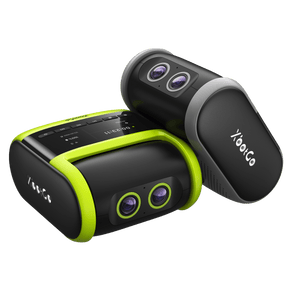
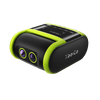
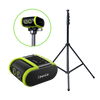
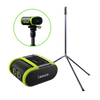
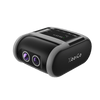
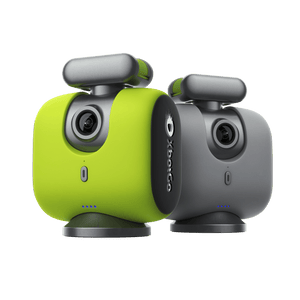
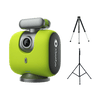
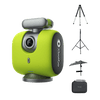
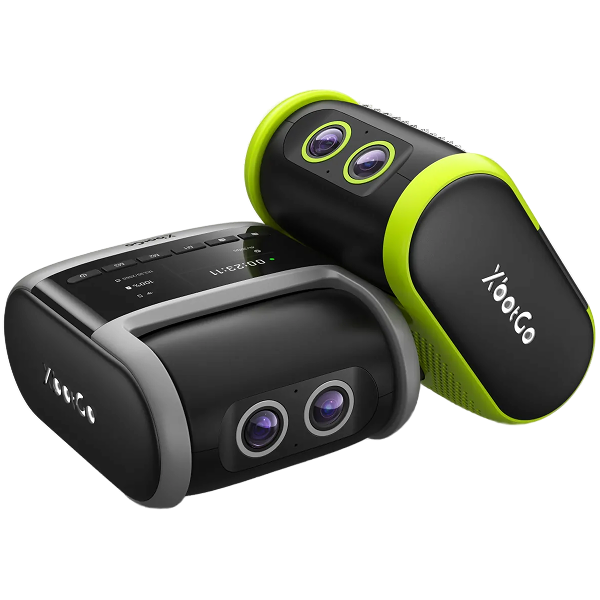
The XbotGo Falcon exemplifies edge computing in action. This AI sports camera features a dedicated 6 TOPS AI processor that runs over 20 deep learning tasks simultaneously—all locally on the device.

Edge AI for Real-Time Sports Tracking
Falcon's edge computing capabilities enable sophisticated features that would be impossible with cloud-dependent systems:
Jersey number recognition – Advanced computer vision identifies and locks onto specific players by jersey number, even in crowded gameplay situations, with all processing happening on-device in real-time.
Motion prediction – The AI anticipates player movement to maintain smooth tracking without lag, processing complex algorithms locally without cloud dependency.
Privacy-first design – All AI computation happens on the device, meaning team strategies, player movements, and game footage never need to travel to external servers—protecting competitive information and player privacy.
Reliability during connectivity issues – Since processing happens locally, the camera continues tracking and recording perfectly even when internet connectivity is poor or nonexistent—a common situation at remote sports fields.
This demonstrates edge computing's core value proposition: performing complex AI tasks locally delivers faster response times, better privacy, improved reliability, and lower costs compared to cloud-dependent solutions.

The Honest Assessment: When Edge Computing Works (and When It Doesn't)
Despite the hype, edge computing isn't the right solution for every situation.
One experienced developer noted: "It's generally pretty gimmicky and has very little real world application...most problems can be solved with conventional algorithms that use less power."
The truth? Edge computing shines in specific scenarios:
- Real-time, safety-critical applications where milliseconds matter
- Connectivity-challenged environments with unreliable internet
- Privacy-sensitive situations requiring local data processing
- High-volume data sources where bandwidth costs would be prohibitive
But for standard business applications with good connectivity and non-critical latency requirements, traditional cloud computing often remains the more practical, cost-effective choice.
The Future of Edge Computing
As 5G networks expand and AI chips become more powerful, edge computing will move from niche applications to mainstream deployment across manufacturing, healthcare, and smart cities.
Success requires looking beyond marketing hype to understand genuine use cases and implement solutions that deliver measurable business value. Edge computing isn't about replacing the cloud—it's about processing data intelligently at every point in your network, choosing the right location for each workload based on latency, bandwidth, privacy, and cost requirements.
When applied thoughtfully to real-world problems, edge computing transforms how we capture, process, and act on data in our increasingly connected world.