

XbotGo Falcon

How Many World Cups Does Spain Have? 2 Titles Explained
Spain has won the FIFA World Cup twice. La Roja claimed their first men’s title in 2010, beating the Netherlands 1–0 in extra time in Johannesburg, South Africa, and their second in 2026, beating Argentina 1–0 in extra time at MetLife Stadium in New Jersey.
Two titles, sixteen years apart, decided the same way: a single goal in extra time. Andrés Iniesta got the first in the 116th minute; Ferran Torres got the second in the 106th.
Here’s the full picture: how Spain won each one, what made the 2008–2012 era historic, and the records both campaigns left behind.

Spain’s 2010 World Cup Win: How La Roja Lifted the Trophy
Spain became the eighth nation to lift the FIFA World Cup on July 11, 2010. The final against the Netherlands in Johannesburg’s Soccer City finished 0–0 after 90 minutes. Then Iniesta struck.
His right-footed finish in the 116th minute — off a pass from Cesc Fàbregas — was the only goal of the match. Goalkeeper Iker Casillas won the tournament’s Golden Glove after conceding just two goals all competition. David Villa led all Spanish scorers with five goals, earning the Silver Boot.
What stands out most about Spain’s 2010 run is how they won it. After losing their opening match to Switzerland, they won every knockout game 1–0. They shut out Portugal, Paraguay, Germany, and the Netherlands — four consecutive knockout clean sheets on the way to the title. No other World Cup champion has done that.
Spain also made history as the first European team to win a World Cup held outside Europe.
The Golden Era That Made It Possible (2008–2012)
The 2010 title didn’t arrive in isolation. It was the centerpiece of the most dominant run any international team has ever produced.
Between 2008 and 2012, Spain won three consecutive major trophies:
- UEFA Euro 2008 — beat Germany in the final
- FIFA World Cup 2010 — beat the Netherlands
- UEFA Euro 2012 — beat Italy 4–0 in the final
No national team has won three consecutive major international titles before or since.
The squad that drove this run is still referenced as a tactical blueprint: Iker Casillas in goal, Carles Puyol and Sergio Ramos in defense, Xavi Hernández and Sergio Busquets controlling the midfield, Iniesta and David Silva adding creativity, David Villa and Fernando Torres up front.
Their style — short passes, constant movement, relentless possession — became known as tiki-taka. Spain averaged over 65% possession per match at the 2010 World Cup and pressed immediately when they lost the ball. Teams worldwide spent years trying to copy and counter it.

Spain’s Full World Cup Record
Spain has appeared in 17 FIFA World Cups. Their record before 2010 was inconsistent — moments of promise, plenty of early exits. Their best pre-2010 result was 4th place at the 1950 World Cup in Brazil.
Here’s a snapshot of key tournaments:
|
Year |
Result |
|
1934 |
Quarter-finals |
|
1950 |
4th place |
|
1954 |
Did not qualify — eliminated by coin toss* |
|
1982 |
Group stage (as host) |
|
1986 |
Quarter-finals |
|
1994 |
Quarter-finals |
|
2002 |
Quarter-finals |
|
2010 |
Champions |
|
2014 |
Group stage exit |
|
2018 |
Round of 16 (lost on penalties) |
|
2022 |
Round of 16 (lost on penalties) |
|
2026 |
Champions |
* In 1954, Spain was seeded before qualifying began, then lost a coin toss against Turkey and was eliminated without ever playing a match. One of the stranger exits in World Cup history.
Through the 2022 tournament, Spain’s all-time World Cup record stood at 67 matches, 31 wins, 17 draws, 19 losses. The 2026 run added eight more matches and a second star.
Three Records Spain Set in 2010 That Most Fans Don’t Know
The 2010 World Cup left Spain with three Guinness World Records — none of which get much attention.
Latest winning goal in a World Cup final. Iniesta’s strike at the 116th minute is the latest match-winning goal ever scored in a FIFA World Cup final. That record still stands today — Ferran Torres came close in 2026, but his winner arrived ten minutes earlier, in the 106th.
Fewest goals by a World Cup champion. Spain scored just 8 goals across 7 matches — the lowest total ever for a title-winning team. Efficient, not prolific.
Fewest different goalscorers for a champion. Only three Spain players scored all tournament: David Villa (5), Carles Puyol (1), and Andrés Iniesta (1). No other World Cup winner has ever won with fewer different scorers.
Together, these records tell a clear story. Spain won 2010 through defensive solidity and clinical execution, not by outscoring opponents — and sixteen years later they went one better at the back, conceding a single goal across eight matches in 2026.

What About the Women? Spain Has Actually Won Three World Cups
This surprises most people. If you count both tournaments, Spain has won three FIFA World Cups — two men’s and one women’s.
The Spanish women’s national team won the 2023 Women’s World Cup in Australia and New Zealand, defeating England 1–0 in the final.
That makes Spain one of only two countries to hold both men’s and women’s World Cup titles. The other is Germany. No other nation has claimed both. It’s a remarkable achievement that rarely comes up when people ask how many World Cups Spain has.
How Spain Won Their Second Title at the 2026 World Cup
Spain went into the 2026 World Cup as the world’s top-ranked team and the reigning European champions, having won UEFA Euro 2024 in Germany — their fourth European Championship — with a squad built entirely around a new generation.
The start was anything but convincing. Drawn in Group H alongside Uruguay, Saudi Arabia, and Cape Verde, Spain were held to a goalless draw by Cape Verde in their opening match, with Lamine Yamal starting on the bench as he managed a hamstring problem carried over from April. He returned to the lineup for the next game and scored in a 4–0 win over Saudi Arabia.
From there the tournament became a defensive masterclass. Mikel Merino’s late goal saw off Portugal 1–0 in the round of 16. Belgium scored in the quarter-finals — the only goal Spain conceded in the entire competition. France were beaten 2–0 in the semi-final in Dallas. Then Ferran Torres settled the final against Argentina in the 106th minute.
Across eight matches, goalkeeper Unai Simón kept seven clean sheets and went 650 consecutive minutes without conceding — both tournament records. Rodri was named the tournament’s best player and took the Golden Ball, Simón took the Golden Glove, and 19-year-old defender Pau Cubarsí won the Young Player award. Only the Golden Boot went elsewhere, to France’s Kylian Mbappé.
Yamal, 19 by the time of the final, ended the tournament with both a European Championship and a World Cup already in hand.

Final Thoughts
How many World Cups does Spain have? Two — 2010 and 2026, sixteen years apart, both settled by a single extra-time goal. The first came at the end of the greatest sustained run in international football history: three major titles in four years, three Guinness World Records from one final, and the first European side to win the trophy on foreign soil. The second came from a completely different squad and a completely different method — eight matches, one goal conceded.
Add the 2023 Women’s World Cup, and Spain has won three FIFA world championships all together.
With Yamal, Cubarsí, and Pedri all still in their early twenties, the question is no longer whether Spain can win another. It’s how many.
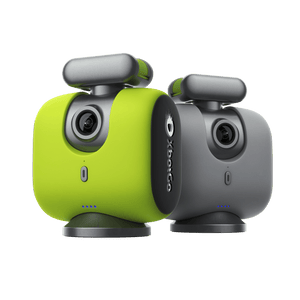
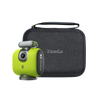
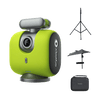
If Spain’s 2026 campaign gets you thinking about leveling up your own team’s game, the XbotGo Falcon might be worth a look. It’s an AI-powered camera that automatically tracks and films your players during training or games — no camera operator needed. A practical tool for coaches who want to review sessions without the hassle.