

XbotGo Falcon

How to Get Better at Basketball: 7 Tips That Actually Work in Games
There’s a gap most players never talk about. You look sharp in the driveway. Crossovers feel crisp. Shots drop. Then the game starts, and everything tightens. You hesitate. The ball doesn’t feel the same.
If you want to know how to get better at basketball, that gap is exactly the right place to start. Because the problem usually isn’t effort — it’s how you’re practicing.
Here are seven tips coaches actually back, grounded in what research and real players confirm works.

Shoot Every Day — 200 Shots Minimum
Shooting is the most valued skill in basketball by a wide margin. In a survey of 307 coaches — spanning youth leagues to the professional level — 74% ranked shooting in their top five most important skills. No other skill came close.
The catch is most players shoot in spurts — a session here, a weekend session there. That’s not how muscle memory builds. Frequency beats volume. Twenty focused minutes every day outperforms a two-hour session once a week.
Start close. Nail your mechanics from five feet before you worry about threes. Work five spots around the key — both baselines, both wings, top of the circle — and hit ten makes from each. That’s 50 quality makes per session. Build from there.

Kill Your Weak Hand Until It’s Not Weak
You can’t hide a weak off-hand for long. Defenders notice within a few possessions. They force you one direction, and your whole game shrinks.
The fix is simple but uncomfortable: use your weak hand for everything in practice. All your dribble series. Drive weak-side only for a full week. It will feel terrible. That’s how you know it’s working.
Add two-ball dribbling — both hands moving simultaneously — to your daily warmup. You’ll feel the coordination gap immediately. Stay with it.
Play Defense Like It Pays Your Rent
Most players treat defense as the tax they pay to get back on offense. That’s a mistake, especially when your offensive skills are still developing.

Defense is available to anyone right now. Basketball players make 50 maximal jumps per game — so leg strength and lateral quickness matter. But you don’t need years of reps to stop your man. You need effort, a low stance, and moving feet. Players who cover their assignments, box out, and contest every shot earn playing time. Players who can’t guard anyone don’t — regardless of how smooth their handle looks.
Hold a defensive stance for 30 seconds at the end of every dribbling session. Low and wide, feet moving. Your legs will hate it. That’s the adaptation you’re after.
Trade Long Sessions for Daily Short Ones
Shorter, more frequent sessions produce faster improvement than long infrequent ones. This isn’t motivational advice — it’s how motor learning works.
In a three-hour session, rep quality degrades sharply after the first hour. You tire, you lose focus, you start engraining bad habits. But 20 focused minutes daily means your nervous system gets reinforced six or seven times a week instead of two or three.
Players who have made this switch consistently report the same outcome: the daily habit accelerated their improvement far more than weekend grinds. Same total hours — very different results.
Use Hustle Plays as Free Points
Not scoring every possession doesn’t mean not contributing. There are points, possessions, and playing time sitting on the floor right now that cost nothing but effort.
Set a screen. Crash the offensive glass. Sprint the floor every time, even when your legs are gone. Box out on every free throw attempt. These don’t require a polished skill set. They require a decision.
One coach put it simply: move constantly and set screens for your teammates, and you’ll stand out — because most players at every level don’t do either.
Watch Film of Your Own Games
Every serious player studies film. Almost no recreational or developing player does. That gap is yours to close right now.

Watching even rough footage of yourself in a real game shows you things no drill ever will. You’ll see exactly where you hesitate, which direction you always go, when you lose your defensive assignment, and which situations make you tighten up. You can’t fix what you can’t see.
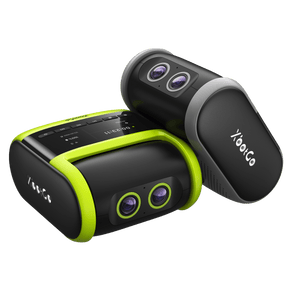
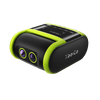
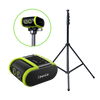
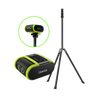
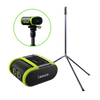
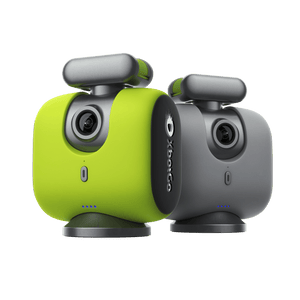
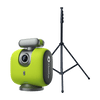
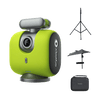
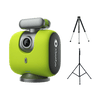
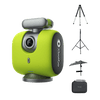
If you want consistent, usable footage without relying on a friend behind the lens, the XbotGo Falcon is worth a look. It’s an AI-powered 4K camera that tracks the action automatically for the full game — clean footage you can actually learn from.

Train Tired so Your Free Throws Hold Up
Free throws in practice are easy. Free throws late in a close game, with your lungs burning and your legs heavy, are completely different. Most players only ever practice the first version.

Finish every conditioning block with 10 free throws before you rest. Not relaxed shooting — free throws immediately after you’ve pushed your heart rate up. Coaches who’ve tracked this consistently point to the free throw gap under fatigue as one of the most overlooked training variables. The goal is to shrink the gap between your practice percentage and your game percentage.
Track both numbers. A player who shoots 80% relaxed but 50% tired has a real problem. Keep going until they’re close.
Here’s the truth about how to get better at basketball: the fundamentals are boring, and they’re also what separate players who improve from players who plateau. Daily shooting. Weak-hand reps. Defensive effort. Short focused sessions. A little film study. These aren’t secrets — they’re things most players skip. Start with one, build the habit, and add from there.