

XbotGo Falcon

What is Field of View (FOV): Your Complete Guide to Capturing More Action
Ever tried filming your kid's soccer game, only to watch them sprint right out of frame? Or missed that game-winning three-pointer because your camera just couldn't keep up? You've just experienced the limitations of field of view—and you're not alone.
Field of view determines how much of the world you can capture at any given moment. Understanding it might just change how you think about cameras, gaming, and especially sports filming. Let's break it down.
What is Field of View?
Field of view (FOV)is the observable area you can see through your eyes or an optical device like a camera at any given moment. Think of it as the viewable world within your frame—whether that's through a camera lens, binoculars, or even your smartphone screen.
Here's the simple truth: wider FOV means you see more of the scene. Narrower FOV means you're zoomed in on less area but with more detail.
Your eyes have a natural FOV of about 170-180 degrees, including your peripheral vision. Cameras? They typically capture much less—anywhere from 60 to 120 degrees depending on the lens.

The Window vs. Straw Comparison
Experts nail this explanation: a wide FOV is like looking through a window, while a narrow FOV is like peering through a soda straw. You're still seeing the same distance, but one gives you context while the other locks you into tunnel vision.
How Field of View Actually Works
FOV is controlled by three main factors: your lens focal length, sensor size, and distance from your subject.
Shorter focal lengths create wider FOV. A 24mm lens captures dramatically more of a scene than a 200mm telephoto lens. It's an inverse relationship—as one goes up, the other goes down.
Sensor size matters too. A larger sensor captures more of the lens's projected image, giving you a wider effective FOV. This is why professional cameras with full-frame sensors can capture sweeping landscapes that smaller sensors simply can't match.
The technical formula is FOV = 2 × tan⁻¹(sensor size / 2 × focal length), but honestly? You don't need to memorize math to understand that shorter lenses see wider, and longer lenses zoom closer.
FOV in Photography: Choosing Your Perspective
Photographers live and die by FOV decisions. Wide-angle lenses (24mm or less) create that expansive landscape look where mountains stretch across your entire frame. They're perfect for real estate, architecture, and environmental portraits.
Telephoto lenses narrow your FOV to isolate subjects. That's how photographers capture stunning wildlife shots or compress city skylines into dramatic compositions.
Standard lenses around 50mm approximate what your eye naturally sees, which is why they're called "normal" lenses. They neither expand nor compress the scene—just capture it as you'd perceive it standing there.
Gaming and Virtual Reality: The Immersion Factor
In gaming, FOV creates fierce debates. Console games typically run at 60-70 degrees, while PC gamers often prefer 90 degrees or more. The difference? Immersion and competitive advantage.
Too narrow, and you get tunnel vision—literally. You might miss enemies approaching from the side. Too wide, and the image distorts, potentially causing motion sickness. Game developers carefully balance FOV to match screen sizes, viewing distances, and performance limitations.
VR headsets push FOV even further, trying to match human vision. The Apple Vision Pro offers around 100 degrees, though users still report a "binocular effect" compared to natural sight.
Sports and Motion Tracking: Where FOV Meets Reality
Here's where FOV gets really interesting—and frustrating. Traditional sports cameras force you to choose: zoom in for detail and risk losing the action, or zoom out and sacrifice video quality.
Parents filming youth sports know this struggle intimately. You frame the shot perfectly, then your daughter breaks toward the goal and disappears from view. Or your son makes an incredible save, but all you captured was empty net.

The Dynamic FOV Solution
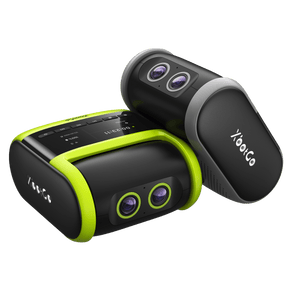
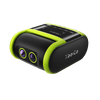
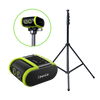
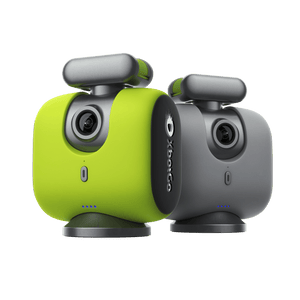
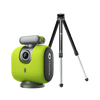
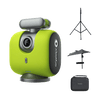
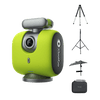
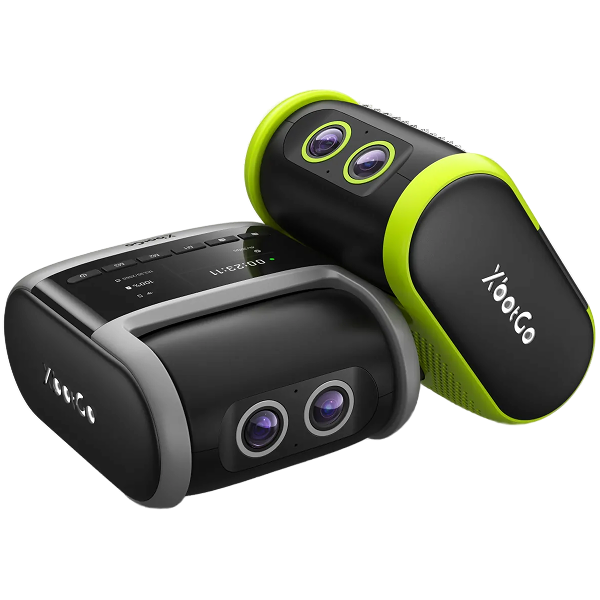
AI-powered camera systems are changing this equation. The XbotGo Falcon, for instance, uses intelligent tracking to automatically adjust framing as players move—effectively creating a dynamic FOV that follows the action. Instead of choosing between wide coverage and close-up detail, the system tracks athletes automatically, keeping them centered regardless of where they move on the field.
This approach works across 10+ sports because it solves the fundamental motion tracking problem that static FOV creates. The camera essentially becomes your personal videographer, making real-time decisions about optimal framing.
For coaches analyzing gameplay or parents capturing memories, this might eliminate the choice between hiring a camera operator or accepting mediocre footage with athletes constantly running out of frame.

Security Cameras: Coverage vs. Detail
Security applications face similar trade-offs. A wide 130-degree FOV camera covers your entire driveway but struggles to capture license plate details. A narrow 60-degree FOV reads plates clearly but creates blind spots.
This is why professional systems often use multiple cameras with overlapping FOV, or PTZ (pan-tilt-zoom) cameras that can adjust their effective FOV. Smart placement becomes critical—mounting height, angle, and distance all affect your actual coverage area.
The Future of Field of View
Technology is moving beyond fixed FOV limitations. AI vision systems can now predict subject movement and adjust framing proactively. Computational photography combines multiple images with different FOV to create impossible shots.
In sports filming particularly, we're seeing a shift from manual camera operation to intelligent tracking systems that understand game dynamics. This could democratize professional-quality sports coverage, making it accessible without expensive equipment or trained operators.