

XbotGo Falcon

How to Master the Triple Threat in Basketball?
Triple threat basketball is the first concept most coaches teach. It’s also one of the least mastered skills in the gym.
Most players learn the stance. Feet shoulder-width, knees bent, ball at the hip. They can demonstrate it in a drill. Then a live defender shows up and everything falls apart — they dribble immediately, stand straight up under pressure, or freeze without making a read.
The problem isn’t the mechanics. It’s that nobody teaches what to do from the stance. This guide covers both: how to set up correctly, and how to actually use it to score.

What Is the Triple Threat Position?
Triple threat is the offensive stance you take whenever you catch the ball before using your dribble. From this position, you can immediately shoot, pass, or drive — and the defender can’t know which.
That uncertainty is the whole point. When a defender has to respect all three options at once, they hesitate or overcommit. Either creates an opening.
Two things to keep in mind. First, triple threat only exists before you dribble. Once you pick up the ball, you can only shoot or pass — understanding triple threat’s rulebook basics keeps you from turning good positioning into a travel. Second, some coaches argue it creates dead time in the offense and say players should act immediately on the catch. That’s a legitimate view for motion-heavy systems — but it assumes players already have the decision-making habits the triple threat position is designed to build.

How to Get Into Triple Threat Position
The goal is to catch the ball already in position — not adjust after.
Four checkpoints on every catch:
- Ball in the protection zone. Right-handers: ball to the left hip, shielded by your body. Left-handers: right hip. Holding the ball out front is an invitation to get stripped.
- Knees bent, hips low. Some coaches call this Level 1. You can explode to shoot, drive, or pass from here. From a straight-up stance, you can’t.
- Weight on the balls of your feet. Not your heels. Your heels are for standing still.
- Eyes up toward the rim. Division I coach Evan Unrau calls it “a really hard skill to teach at any level” — pros still drop their eyes on the catch. Eyes up is what lets you make any read at all.
The Shoot-First Rule
Most players think triple threat means three equal options. It doesn’t.
Shooting is the threat that makes the other two work.
If a defender knows you won’t shoot, they stop closing out. They crowd the ball, sit on the drive, and dare you to pass. Triple threat stops being a problem for the defense because you’re only threatening two things — and a good defender can take both away.
Catch ready to shoot every time. Look at the rim first. You don’t have to fire on every possession — but the defender should believe you might. One player described the consequence of skipping this step: “Defenders don’t respect my shot, so the jab step does nothing.” That’s not a footwork problem. It’s a threat problem.
How to Read Your Defender from Triple Threat
This is the part most drill-based teaching skips: the actual decision.
Triple threat is reactive. You don’t plan a move before you look at the defense. You read the defense, and it tells you what to do.
Three basic reads:
Defender backs off. They’re giving you space. Take the shot.
Defender crowds you. They’re sacrificing the drive to take away your shot. Use your jab step and attack the basket.
Defender shades to one side. They’re trying to eliminate an option. Go the other direction.
The reads are simple. The hard part is recognizing them in real time. That only comes from reps in live situations — not stationary drills.
The Jab Step — Your Best Weapon from Triple Threat
The jab step is the most important offensive skill that branches off of triple threat. A short, explosive step with your free foot forces the defender to react — then you counter based on how they move.

Three counters every player should own:
Jab and go. Defender gives space or steps back. Explode in the jab direction and attack.
Jab and cross. Defender jumps to cut off the jab. Step back and attack the open side.
Jab and shoot. Defender’s feet shift but they stay in front of you. Rise up into your shot over their weight shift.
The jab only sells if your whole body sells it — shoulders, hips, and ball movement, not just your foot. A skeptical defender reads a foot-only jab instantly.
Keep the step short. A wide, lunging jab puts you in an unbalanced position you can’t quickly change direction from. Short and sharp keeps every option available.
Common Triple Threat Mistakes
Holding the ball out front. The single most common error at every level. Move the ball to your hip the moment you catch.
Standing straight up. Defenders read the hesitation, and you lose any explosive first step. Stay bent.
The pre-determined dribble. Catching the ball and immediately dribbling is the most common way players kill their own triple threat. You’ve made a decision before reading anything. According to coach Evan Unrau, eyes-up discipline on the catch is what breaks this habit — you can’t read the floor while staring at the ball.
Lifting the pivot foot before the dribble. This is a travel. The correct sequence: release the ball to begin your dribble first, then lift and drive. Never lift the pivot foot before the ball leaves your hand.

3 Drills to Build Game-Ready Triple Threat Habits
Jump Stop into Triple Threat. Three dribbles, then a jump stop, then lock immediately into triple threat. Add a pivot once you’re comfortable. Builds the habit of stopping with purpose.
Eyes-Up Number Call. A partner stands under the rim holding up a number. You catch a pass, get into triple threat, and call out the number before doing anything else. Forces the eyes-up habit with instant feedback.
1-on-1 Live Reads. No pre-set move. Catch the ball, read the defender, use the right counter. This is the only drill that builds the decision-making speed a game actually demands.
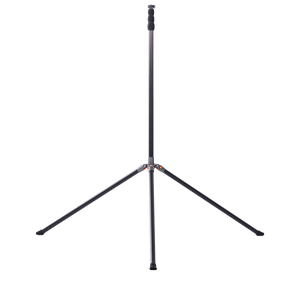
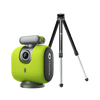
The fastest way to accelerate progress on any of these drills is to watch your own footage. The XbotGo Falcon automatically tracks and films you throughout a session, so you can see exactly where the ball sits at the catch, whether your stance is genuinely bent, and whether your jab step is getting a real reaction — things you can’t feel in real time but can spot and fix in seconds on replay.

The Bottom Line
Triple threat is not a beginner concept you graduate from. It’s the decision-making framework you use every time you catch the ball in the half court.
Get into the stance on every catch. Make your shot a real threat. Read the defender, and react to what they give you. The weapon is already built into the position — you just have to learn to use it.