

XbotGo Falcon

What Is a Double Dribble in Basketball?
A double dribble is when a player ends their dribble — picks up the ball — and then starts dribbling again. It is one of the oldest rules in basketball, and one of the most misunderstood.
During the 2025 NBA Playoffs, a late-game possession by Tyrese Haliburton sparked a huge debate about whether he had double dribbled on a key play. The official review ruled it legal — Mikal Bridges had deflected the ball, which made Haliburton’s resumed dribble a completely legal play under the rules. More on why that matters below.

The Two Ways to Commit a Double Dribble
According to NBA Rule No. 10, “A player may not dribble a second time after he has voluntarily ended his first dribble.”
There are two specific ways this gets called:
1. Stop and Restart
The most common scenario. A player dribbles, lets the ball rest in one or both hands — ending the dribble — then starts dribbling again. Once you pick up your dribble, your only legal plays are to pass or shoot. Put it back on the floor and it is a violation.
2. Dribbling With Both Hands Simultaneously
A player dribbles with both hands touching the ball at the same time. This is rarer and less commonly called at the pro level, but it is still in the rulebook.

In both cases, the penalty is a turnover. The opposing team gets the ball at the nearest out-of-bounds spot. No free throws — a double dribble is a violation, not a foul.
What Is NOT a Double Dribble (The Three Exceptions)
This is where most of the confusion lives. Three situations look like double dribbles but are completely legal:
1. An opponent touches the ball
If a defender deflects or pokes the ball while you are dribbling, you can pick it up and start dribbling again. This is exactly what made Haliburton’s play legal — the deflection reset his right to dribble.
2. Your shot attempt hits the rim or backboard
Shoot, miss, get your own rebound? You can dribble again, as long as the ball touched the rim or backboard first. An airball does not count.
3. A pass or fumble touched by another player
If a passed ball is tipped or touched by another player before you catch it, you may start dribbling. You did not voluntarily end your dribble — someone else forced it loose.

The FIBA Official Basketball Rules and the NBA rulebook list the same three exceptions. These rules apply at every level of play.
Double Dribble vs. Carrying — What’s the Difference?
Players and fans often mix these up. Both are dribbling violations that result in a turnover. But they are different infractions.
Double dribble happens when a player restarts a dribble they already ended. The ball was under control and the player chose to dribble again.
Carrying (palming) happens when a player lets the ball come to rest in an upturned palm during the dribble and then keeps moving. The dribble technically never ended — it just became illegal mid-motion.
Referees use different hand signals for each. A double dribble gets both hands mimicking alternating dribbles. A carry gets one hand rotating palm-up. Same rulebook, different mechanics, different call.

Why the NBA Barely Calls It
At the youth level, double dribble gets called often. At the professional level, almost never.
Speed is part of it. At NBA pace, distinguishing between a legal slowed dribble and an illegal stopped one is genuinely hard to judge in real time. Slow-motion replays can make completely legal continuous dribbles look like violations.
Context matters too. Refs at the pro level prioritize game flow. As Basketball For Coaches puts it: “enforcement is much easier than other violations like traveling” — which makes the misses all the more frustrating when they happen in high-stakes moments.
The 2019 NCAA Final Four between Auburn and Virginia is the most-discussed example. Ty Jerome appeared to double dribble on a key late possession and it went uncalled. Virginia retained the ball, forced a foul, and won 63-62. Coach Bruce Pearl publicly acknowledged the missed call. The moment became a defining example of how even obvious violations can slip through in a live game.
How Coaches Use Video to Fix Dribbling Habits
The best time to fix a double dribble tendency is in practice — before it costs you in a game.
Coaches who film training sessions can review every possession and flag players who habitually pick up the ball under defensive pressure, lose composure during a full-court press, or end their dribble too early in transition. Once the pattern is on film, it is easy to target with specific drills.
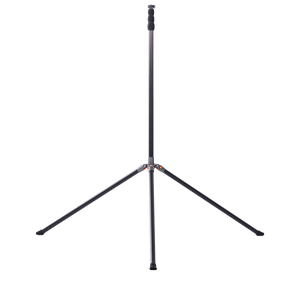
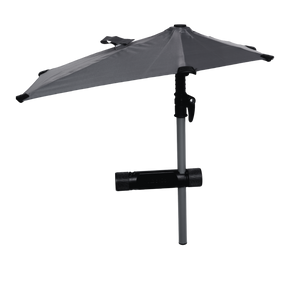
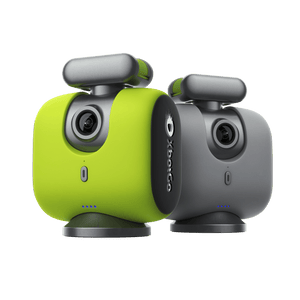
The XbotGo Falcon is a 4K AI camera that automatically tracks players through an entire practice — no camera operator needed. Coaches can review dribbling mechanics after each session and isolate the exact moments where violations happen. For youth teams still building fundamentals, showing a player the precise moment they double dribbled is far more effective than just telling them.

The Rule Across Leagues
|
League |
Rule |
Penalty |
|
NBA |
Rule No. 10, Section II |
Ball awarded at sideline; no closer to baseline than foul line extended |
|
FIBA |
Article 24.2 (2024 rules) |
Ball awarded at nearest out-of-bounds spot |
|
NCAA |
Rule 9, Section 7, Article 1 |
Ball awarded at nearest out-of-bounds spot |
|
High School (NFHS) |
Similar to NCAA |
Ball awarded at nearest out-of-bounds spot |
One key difference: the NBA requires the inbound to be at least as far from the basket as the foul line extended. FIBA, NCAA, and high school simply award the ball closest to where the violation happened.
Quick Summary
A double dribble comes down to one simple principle — once you pick up your dribble, pass or shoot. Do not put the ball back on the floor. The two exceptions every player needs to know: a defender deflection resets your dribble right, and so does a shot attempt that hits the rim or backboard.
The rule is called constantly in youth basketball and rarely at the professional level. If you are coaching, filming practices gives you a direct way to catch dribbling patterns before they turn into turnovers in a game.