

XbotGo Falcon

Bluetooth 5.2 Explained: Why Your Device Upgrade Matters
Bluetooth 5.2 might sound like a minor update, but it's actually reshaping how wireless devices talk to each other. If you've been frustrated with audio lag during video calls, wished you could seamlessly switch between devices, or wondered why your "latest" Bluetooth headphones don't feel that different from your old ones, understanding Bluetooth 5.2 will clear things up.
The Quick Answer: What is Bluetooth 5.2?
Bluetooth 5.2 is a wireless technology specification released in early 2020 that introduces three game-changing features: Isochronous Channels for synchronized audio, Enhanced Attribute Protocol for true multitasking, and LE Power Control for smarter battery management. It's the foundation for LE Audio, a completely new audio standard that delivers better sound quality while using less power.
The big deal? Bluetooth 5.2 doesn't just make things faster—it makes them smarter.

Why Bluetooth 5.2 Matters (And Why 5.0 Set the Stage)
To appreciate what 5.2 brings to the table, you need to understand what came before it. Bluetooth 5.0 arrived in 2016 with massive improvements: double the data transfer speed, range extended from 50 feet to 120 feet, and eight times the data broadcasting capacity.
Those improvements made features like Samsung's Dual Audio possible—streaming music to two different headphones simultaneously from one phone. Pretty cool, right?
Bluetooth 5.2 takes that foundation and adds intelligence. It's not just about moving more data faster. It's about moving the right data at the right time to the right devices, all while sipping power instead of guzzling it.
The Three Core Features That Make Bluetooth 5.2 Special
Isochronous Channels: Perfect Timing Across Multiple Devices
The word "isochronous" means occurring at the same time, and that's exactly what this feature delivers. Isochronous Channels enable time-sensitive data transmission with synchronized rendering across multiple receivers.
Here's what that actually means for you:
Your true wireless earbuds need perfect timing between the left and right sides. Even a few milliseconds of delay would make music sound weird. Isochronous Channels ensure both earbuds receive their audio streams in perfect sync, eliminating any timing issues.
But it goes beyond earbuds. Imagine walking into a sports bar and tuning your Bluetooth headphones directly to the TV broadcast, choosing your preferred language commentary. Or picture everyone at an international conference selecting their language stream on their personal devices. That's the broadcast power of Isochronous Channels.
The technology supports both Connected Isochronous Streams (CIS) for direct device connections and Broadcast Isochronous Streams (BIS) for one-to-many broadcasting scenarios.
Enhanced Attribute Protocol: True Multitasking
Previous Bluetooth versions processed requests one at a time. If your fitness app wanted to pull data from your smartwatch while your music app was also communicating with it, one had to wait. That's inefficient.
Enhanced Attribute Protocol changes the game by enabling parallel transactions. Multiple applications on your smartphone can now interact with a Bluetooth device simultaneously without blocking each other.
Think of it like this: instead of a single-lane road where cars must go one at a time, EATT creates multiple lanes where traffic flows smoothly in parallel.
This might seem like a technical detail, but it makes a real difference. Faster app responsiveness, smoother device interactions, and better overall user experience all stem from this enhancement.
LE Power Control: Smart Energy Management
Wireless receivers work best within an optimal signal strength range. Too strong or too weak creates problems with signal quality. LE Power Control enables devices to dynamically adjust transmission power based on real-time feedback.
The benefits compound:
- Better signal quality through optimal power management
- Fewer transmission errors and retransmissions
- Improved coexistence with Wi-Fi and other 2.4 GHz technologies
- Extended battery life across all connected devices

Bluetooth 5.2 in Action: Real-World Applications
Consumer Electronics
Everyday scenarios that improve:
- Watching videos with zero audio lag
- Switching seamlessly between laptop, phone, and tablet without re-pairing
- Longer battery life on wireless earbuds and speakers
- Better connection stability in crowded wireless environments
Professional and Sports Technology
This is where Bluetooth 5.2 really shines for specialized applications. The combination of synchronized channels, parallel processing, and power efficiency creates opportunities that weren't possible before.
Sports broadcasting and content creation benefit enormously from these capabilities. Professional systems need to coordinate multiple data streams—video feeds, audio tracks, real-time analytics, and wireless communication—all perfectly synchronized.
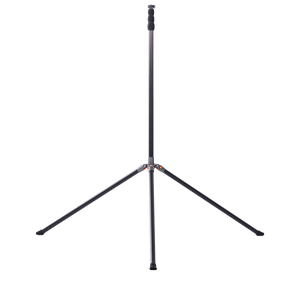
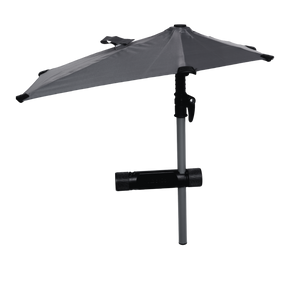
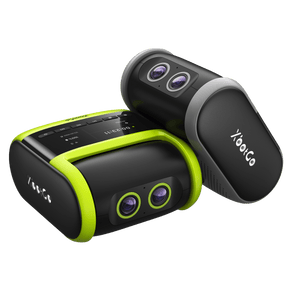
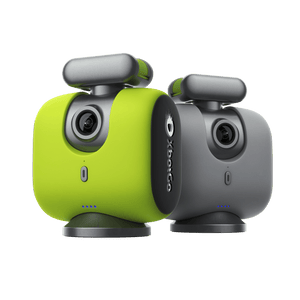
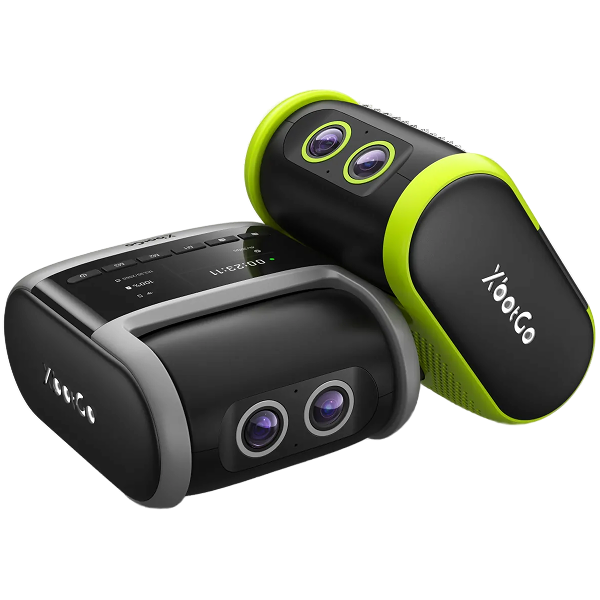
Advanced AI sports cameras can leverage Bluetooth 5.2's capabilities in sophisticated ways. For instance, the XbotGo Falcon uses Bluetooth connectivity to coordinate with smartphones, tablets, and streaming platforms simultaneously. The Enhanced Attribute Protocol ensures that AI tracking commands, recording controls, and live streaming data all flow smoothly without interference, while Isochronous Channels could enable future features like synchronized multi-camera setups for comprehensive game coverage.
The power efficiency gains from LE Power Control prove particularly valuable for extended sports recording sessions where battery life directly impacts whether you capture the winning goal or run out of juice in the final minutes.

Healthcare and Accessibility
Bluetooth 5.2 represents a revolution for hearing aid technology. LE Audio enables hearing aids to stream audio directly from phones, TVs, and public announcement systems with minimal power consumption, making devices smaller and more discreet while lasting longer on a single charge.
What You Need to Know About Compatibility
The Good News: Everything Still Works
Here's something reassuring: Bluetooth maintains backward compatibility. Your Bluetooth 5.0 smartphone will absolutely work with Bluetooth 5.2 earbuds. Pairing, audio playback, calls, and basic controls function perfectly fine across versions.
The Catch: Advanced Features Require Full Support
You won't get LE Audio, LC3 codec benefits, or multi-stream capabilities unless both your devices support them. As one user discovered after three years: "My recently purchased 5.3 headphones don't support LE audio at all."
This highlights a critical point: the Bluetooth version number alone doesn't tell the whole story.
What to Actually Look For
Smart shoppers verify these specifics:
- Explicit LE Audio support mentioned in specifications
- LC3 codec compatibility clearly stated
- Profile support (TMAP and GMAP for LE Audio)
- Manufacturer commitment to firmware updates
Don't just check the version number. Verify the actual features you want are genuinely supported.
The Bottom Line
Bluetooth 5.2 transforms wireless connectivity from simple data transfer into intelligent, synchronized communication. Features like Isochronous Channels, Enhanced Attribute Protocol, and LE Power Control enable applications that were previously impossible—from perfectly synchronized audio to professional sports broadcasting.
The key is verifying actual feature support rather than trusting version numbers alone. When properly implemented, Bluetooth 5.2 genuinely delivers revolutionary improvements in audio quality, power efficiency, and multi-device coordination.
For new device investments, look for explicit LE Audio and LC3 codec support to experience the full benefits of this next-generation wireless technology.