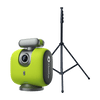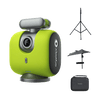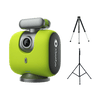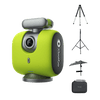


XbotGo Falcon

Best Volleyball Cameras for Recording (2026 Guide)
Most guides to the best volleyball cameras for recording open with sensor size and zoom range. In a high school gym, neither one is your problem.
Your problems are that the ceiling is low, the walls are close, and the lights are dimmer than you think. Solve those and a modest camera gives you film a coach can use. Ignore them and an expensive one hands you a blurry view of the back of someone's head.

Why volleyball gyms are harder on cameras than fields
Volleyball's own rulebook sets a low bar for light. USA Volleyball requires just 300 lux — about 28 foot-candles — measured a meter above the floor, and high school rules from the NFHS don't regulate gym lighting. Compare that with the FIVB rulebook, which demands no less than 2,000 lux for its top-level events. Your kid's gym is legally allowed to be about seven times darker than a professional venue.
That gap is the whole story behind noisy footage. Freezing a spike needs a fast shutter, a fast shutter needs light, and nobody promised you any.
Then there's the geometry. The court is 18 by 9 meters, and the ball stays legally in play up to 15 feet above the floor — but recommended ceiling clearance is only about 23 feet. Your camera has to cover a tall box from a short mount. Worse, the NFHS asks for just 6 feet of unobstructed space outside the boundary lines. In most gyms you physically cannot back up far enough to fit the court in frame.
You can't move back. You have to move up.
The best volleyball cameras for recording
| Camera | Setup | Best for | Ongoing cost |
|---|---|---|---|
| XbotGo Falcon | Portable, tripod | Clubs and families who film every week | None for core features |
| Hudl Focus Indoor | Permanent install | Schools with a budget and a home gym | Subscription |
| Veo Cam 3 | Portable, tripod | Programs already in the Veo ecosystem | Subscription |
| Pixellot Air | Portable, tripod | Leagues wanting automated streams | Subscription |
| GoPro or action cam | Portable, tripod | Cheap, rough-and-ready backup | None |
| Phone on a light stand | Portable, stand | One-off matches, tight budgets | None |
XbotGo Falcon
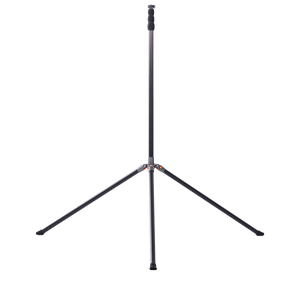
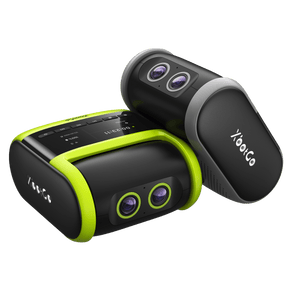
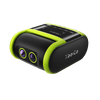
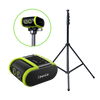
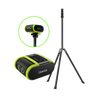
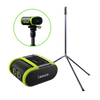
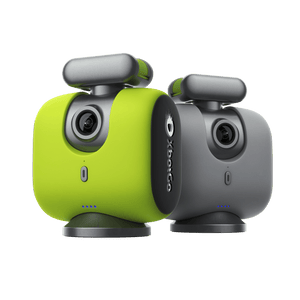
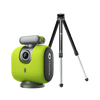
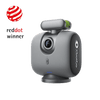
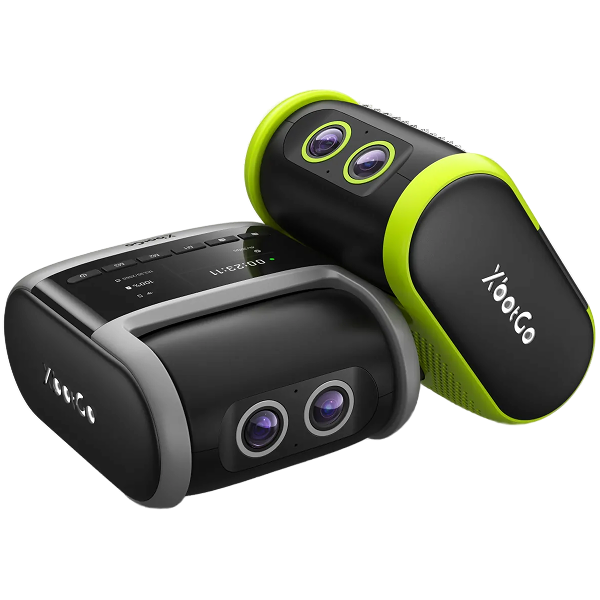
If you want the height without a person attached to it, the XbotGo Falcon is worth a look. Its volleyball mode walks you through placement on screen: put the tripod 3 m (about 10 ft) outside the sideline, raise it to 2.5 m (about 8 ft), then rotate it to aim the lens at the center line for full-court coverage.

From there you can go live to YouTube, Facebook, TikTok or any RTMP destination while it keeps recording, and overlay a live scoreboard for family watching from home. Core recording, tracking and streaming need no subscription.

Two honest caveats: you supply your own microSD card, and the battery runs about four hours — warm-ups plus a match, not a full tournament day without a top-up.
Hudl Focus Indoor
Mounts permanently near the midline and films hands-free, feeding straight into Hudl's analysis tools. The smoothest workflow here if your program already lives in that ecosystem. It records in HD rather than 4K, needs an installation, and carries a subscription — which rules it out for club teams renting gym time.
Veo Cam 3
A fixed wide-angle camera with no moving parts that captures the full court and crops in afterward. Proven in soccer and workable on a volleyball court, though the subscription is the real cost and the framing was designed for much larger fields.
Pixellot Air
Built for automated recording and streaming, and popular with leagues that want every court covered without staffing them. Also a subscription, so weigh a season of fees against a one-time purchase.
GoPro or an action camera
Cheap, tough, and survives being knocked over — which matters more than you'd expect. The trade-offs are real: the widest 4K modes bend the court edges into a fisheye curve, and many models overheat and shut down after roughly 30 minutes at 4K60. Bring spare batteries.
Your phone on a light stand
The most common setup in any gym, and it works. The catch is that your phone is now 10 feet in the air for two hours. As one volleyball parent put it: "iPhones are great and handy, but I want my phone during the game."

Height beats tracking on a volleyball court
Here's the part no camera roundup tells you. A volleyball court is about a fortieth the size of a soccer pitch. One camera in one spot can see all of it.
That changes what you should buy. In soccer, tracking earns its keep because the ball travels 100 meters and no fixed frame holds it. In volleyball, the ball rarely leaves a box you could cover with a wide lens and a tall stand. One experienced volleyball parent put it plainly: the camera "doesn't need to track" — what they wanted was automatic highlights afterward.
So spend on elevation first. Get above the front row and you can see the back row's footwork, which is the whole point of game film. Stay at eye level and your libero disappears behind a blocker on every rally. A tip that circulates among club parents: a spring-loaded light stand goes higher than a camera tripod, costs less, and has a narrow base that doesn't trip people in a crowded gym.

Sideline or endline? It depends what the film is for
This is where advice contradicts itself, and it's worth being straight about.
For tracking and team analysis, film from the sideline. That's what the Falcon's own setup guide specifies, and it's the angle that shows both teams' formations and rotations at once. It also keeps a tracking camera happy, because the action stays centered.
For college recruiting video, film from the endline. Recruiting coordinators consistently ask for a centered endline shot, 8 to 10 feet up, on your own team's side — so switch ends when the teams do. From behind, a coach can read approach angles and defensive positioning that a side view flattens out.

Both are correct. They're just different jobs, and one camera in one position can't do both.
Coaches also want something that surprises people: unedited film. As one explained in a JVA recruiting guide, highlight reels show technique, but full match footage shows "how they respond to mistakes/errors." Record the whole match, not just the good parts.
And a warning nobody prints: your camera records your sideline too. Coaches have opened recruiting film and heard parents criticizing players for a full set.
The short version
The best volleyball cameras for recording aren't the ones with the biggest sensors. Gyms are dark by rule, ceilings are low, and there's no room to back up — so height and a full-court frame beat specs every time.
Decide what the footage is for before you buy. Team analysis points you to the sideline; recruiting points you to a centered endline shot and full, unedited matches. Get the camera up, get the whole court in frame, and check your storage before first serve. And if the Falcon is where you land, it's worth learning how to set it up for volleyball before your first match — the tripod height is the part most people get wrong.