

XbotGo Falcon

FIFA World Cup Winners List: Every Champion from 1930 to 2026
Twenty-three tournaments. Nearly a century of football. And only eight countries have ever lifted the FIFA World Cup trophy.
That number is what makes the tournament so remarkable. Despite over 200 nations competing in qualifying, the title has never left South America or Europe. Not once in 96 years.
Here’s the complete FIFA World Cup winners list — every champion from 1930 through Spain’s 2026 triumph in North America — plus the records, streaks, and stories behind each title.

Complete FIFA World Cup Winners by Year
Every World Cup champion from the inaugural 1930 tournament through 2026. The 1942 and 1946 editions were cancelled due to World War II.
|
Year |
Host |
Winner |
Runner-Up |
Score |
|
1930 |
Uruguay |
Uruguay |
Argentina |
4–2 |
|
1934 |
Italy |
Italy |
Czechoslovakia |
2–1 (aet) |
|
1938 |
France |
Italy |
Hungary |
4–2 |
|
1950 |
Brazil |
Uruguay |
Brazil |
2–1* |
|
1954 |
Switzerland |
West Germany |
Hungary |
3–2 |
|
1958 |
Sweden |
Brazil |
Sweden |
5–2 |
|
1962 |
Chile |
Brazil |
Czechoslovakia |
3–1 |
|
1966 |
England |
England |
West Germany |
4–2 (aet) |
|
1970 |
Mexico |
Brazil |
Italy |
4–1 |
|
1974 |
West Germany |
West Germany |
Netherlands |
2–1 |
|
1978 |
Argentina |
Argentina |
Netherlands |
3–1 (aet) |
|
1982 |
Spain |
Italy |
West Germany |
3–1 |
|
1986 |
Mexico |
Argentina |
West Germany |
3–2 |
|
1990 |
Italy |
West Germany |
Argentina |
1–0 |
|
1994 |
USA |
Brazil |
Italy |
0–0 (3–2 pens) |
|
1998 |
France |
France |
Brazil |
3–0 |
|
2002 |
Japan/S. Korea |
Brazil |
Germany |
2–0 |
|
2006 |
Germany |
Italy |
France |
1–1 (5–3 pens) |
|
2010 |
South Africa |
Spain |
Netherlands |
1–0 (aet) |
|
2014 |
Brazil |
Germany |
Argentina |
1–0 (aet) |
|
2018 |
Russia |
France |
Croatia |
4–2 |
|
2022 |
Qatar |
Argentina |
France |
3–3 (4–2 pens) |
|
2026 |
USA/Canada/Mexico |
Spain |
Argentina |
1–0 (aet) |
*The 1950 tournament used a final round-robin instead of a knockout final. Uruguay’s decisive 2–1 win over Brazil is treated as the equivalent of a final.
Nations with the Most World Cup Titles
1. Brazil — 5 Titles (1958, 1962, 1970, 1994, 2002)
Brazil is the gold standard. Five World Cup wins, appearances at every single tournament ever held — the only nation in history to achieve that — and a roster of legends that includes Pelé, Garrincha, Ronaldo, and Ronaldinho.
Their 1970 squad, which beat Italy 4–1 in Mexico City, is widely regarded as the greatest international team to ever play the game. According to Wikipedia’s complete finals record, Brazil also finished runner-up twice (1950 and 1998), giving them 7 total final appearances.
2. Germany — 4 Titles (1954, 1974, 1990, 2014)
Germany has appeared in 8 World Cup finals — more than any other nation — winning four and losing four. Their 2014 triumph stands out for sheer audacity: they beat host Brazil 7–1 in the semi-final, then beat Argentina 1–0 in extra time in the final in Rio de Janeiro. Winning the World Cup on South American soil, against two South American nations, is a feat no European team has matched before or since.
3. Italy — 4 Titles (1934, 1938, 1982, 2006)
Italy is the only nation to win back-to-back World Cups. Their 1934 and 1938 victories, both under coach Vittorio Pozzo, give Pozzo a distinction no other manager has matched: two World Cup titles. Italy added further championships in 1982 (a commanding 3–1 win over West Germany in Madrid) and 2006 (a penalty shootout over France in Berlin, after Zinedine Zidane’s infamous headbutt in extra time).

4. Argentina — 3 Titles (1978, 1986, 2022)
Argentina’s World Cup story is one of extremes — three titles and four runner-up finishes, with heartbreak and glory in equal measure.
The 1986 tournament belonged entirely to Diego Maradona. His “Goal of the Century” against England — a 60-meter solo run beating five defenders — is still the most celebrated individual goal in the sport’s history.
The 2022 final in Qatar is widely considered the greatest World Cup final ever played. Argentina led twice. France equalized twice. It went to extra time at 3–3. Argentina won on penalties. Lionel Messi, finally, had his World Cup.
Four years later they went back to the final and lost it, beaten 1–0 by Spain in extra time at MetLife Stadium. Messi still finished the 2026 tournament with the Silver Ball and the Silver Boot, and left the World Cup stage as its second-highest scorer of all time.
5. Spain — 2 Titles (2010, 2026)
Spain’s 2010 win in South Africa completed one of international football’s greatest three-year runs: Euro 2008, World Cup 2010, Euro 2012. Andrés Iniesta scored the only goal — in extra time, against the Netherlands — to cap a tournament in which Spain never conceded more than one goal in a match.
Sixteen years later, Spain did something even stricter. Across eight matches in North America they conceded a single goal all tournament — to Belgium in the quarter-finals — and beat Argentina 1–0 in extra time in the final. Both Spanish titles, remarkably, were settled by an extra-time goal in a 1–0 final.
6. France — 2 Titles (1998, 2018)
France won at home in 1998 (3–0 over Brazil) and claimed their second in Moscow in 2018 (4–2 over Croatia, with a 19-year-old Kylian Mbappé becoming only the second teenager to score in a World Cup final, after Pelé). No country has won more World Cups than France in the modern era.
7. Uruguay — 2 Titles (1930, 1950)
Uruguay hosted and won the inaugural tournament in 1930, beating Argentina 4–2 in the final. Their 1950 title — the “Maracanazo” — is arguably the sport’s greatest upset. Over 200,000 fans packed Rio’s Maracanã expecting a Brazilian victory. Uruguay won 2–1. The stadium fell silent. Uruguay declared a national holiday.
8. England — 1 Title (1966)
England’s only World Cup came on home soil at Wembley in 1966. Geoff Hurst scored a hat-trick in the final against West Germany — the only hat-trick in World Cup final history — in a 4–2 win that went to extra time.

Records and Milestones
A few numbers that stand out from the full statistical record:
- Only player to win three World Cups: Pelé — 1958, 1962, and 1970 with Brazil
- Only manager to win two World Cups: Vittorio Pozzo — Italy in 1934 and 1938
- All-time top scorer: Kylian Mbappé — 22 goals for France. He passed Lionel Messi (21) with a brace in the 2026 third-place playoff, and both men moved clear of Miroslav Klose’s long-standing mark of 16 during that tournament
- Most goals in a single tournament: Just Fontaine — 13 goals for France in 1958, in only 6 matches. Still unbeaten; Mbappé’s 10 in 2026 was the closest anyone has come in decades
- Only player to win the Golden Boot twice: Kylian Mbappé — 2022 and 2026
- Fastest goal in World Cup history: Hakan Şükür — 11 seconds for Turkey vs. South Korea in 2002
- Largest winning margin: Hungary 10–1 El Salvador in 1982
- Record attendance: 173,850 fans at Maracanã for Uruguay vs. Brazil in 1950 — a record that still stands today
Six tournaments have been won by the host nation: Uruguay (1930), Italy (1934), England (1966), West Germany (1974), Argentina (1978), and France (1998). No host has won since — and 2026 extended that run emphatically, with all three co-hosts eliminated in the round of 16: the United States by Belgium, Mexico by England, and Canada by Morocco.

The Nations That Never Quite Made It
Thirteen nations have reached a World Cup final. Five never won.
Netherlands holds the most painful record in the sport: three finals (1974, 1978, 2010), zero titles. Their 1974 team — Johan Cruyff’s “Total Football” side — is still considered one of the greatest teams to never win the tournament. They lost to the host nation each time.
Hungary reached two finals (1938, 1954) and lost both. The 1954 loss to West Germany was the bigger shock. Hungary entered as heavy favorites, having scored 25 goals in their first two matches. They led 2–0 after eight minutes. West Germany came back to win 3–2 in what’s remembered as the “Miracle of Bern.”
Czechoslovakia finished runner-up twice (1934, 1962) without ever lifting the trophy. Sweden lost to Brazil on home soil in 1958 (5–2), and Croatia fell to France in 2018 (4–2) despite reaching their first-ever final.
The 2026 World Cup: Spain Add a Second Star
The 2026 World Cup was the biggest edition ever staged: 48 teams, 104 matches, and a combined attendance of more than 6.8 million across the United States, Canada, and Mexico.
Spain won it, beating Argentina 1–0 after extra time at MetLife Stadium in New Jersey on July 19. Ferran Torres scored the only goal in the 106th minute. It was a rematch of eras as much as of teams — Spain’s young midfield against a 39-year-old Lionel Messi in his sixth and final World Cup.
Spain’s route there was built on defense. They conceded once in eight matches, and goalkeeper Unai Simón kept seven clean sheets and went 650 consecutive minutes without conceding — both tournament records. Rodri took the Golden Ball as the best player, Simón the Golden Glove, and 19-year-old defender Pau Cubarsí the Young Player award.
The one major individual prize that went elsewhere was the Golden Boot: Mbappé finished with 10 goals, two of them in France’s wild 6–4 third-place defeat to England, where Bukayo Saka scored a hat-trick.
The next tournament, in 2030, will be hosted by Spain, Portugal, and Morocco, with centenary opening matches in Uruguay, Argentina, and Paraguay.
Capture the Next Generation
Watching Messi, Mbappé, and Rodri light up a World Cup has a way of inspiring young players. The next step is bringing that competitive edge to the youth field — and having footage to back it up.
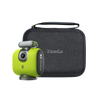
The XbotGo Falcon is an AI-tracking camera built for team sports. It follows the play automatically in true 4K — no operator needed — so coaches can review footage and show players exactly where to improve. For any youth soccer program serious about player development, it might be worth a look.

A Final Word
The FIFA World Cup winners list covers 96 years, 23 tournaments, and eight extraordinary nations. Brazil leads with five titles, Germany has appeared in the most finals, Italy is the only back-to-back champion, and Spain finally added a second star when they edged Argentina in New Jersey.
Ninety-six years in, the trophy still has not left Europe or South America. Whether 2030 finally changes that is the question the next generation gets to answer.