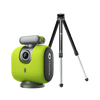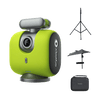


XbotGo Falcon

Who Won the First World Cup? The Story of Uruguay 1930
Uruguay. On July 30, 1930, in a packed stadium in Montevideo, Uruguay defeated Argentina 4–2 to become the first nation in history to lift the FIFA World Cup. A country of just 1.75 million people — smaller than most major cities today — had beaten the world. What made it even more remarkable was the chaos, controversy, and near-disaster it took to get there.
A Tournament That Almost Never Happened
FIFA had 41 member nations in 1930. Only 13 showed up.
Most European teams refused to make the 16-day transatlantic boat journey. With the Great Depression tightening its grip, players worried their jobs would be gone by the time they returned. England wasn’t even in FIFA. Germany, Italy, Spain, and Austria — all major football powers — didn’t come. Only France, Belgium, Romania, and Yugoslavia made the trip, partly because Uruguay offered to cover travel and accommodation costs.
Jules Rimet, FIFA’s president and the driving force behind the tournament, literally carried the trophy across the Atlantic in his suitcase. When the teams arrived, the main stadium wasn’t even finished yet — construction at the Estadio Centenario had been delayed by rain and wasn’t ready until five days into the tournament.
Uruguay was chosen to host for two reasons: they’d won back-to-back Olympic gold medals in 1924 and 1928, and they were celebrating 100 years of independence. The perfect occasion. A deeply imperfect tournament.
The Road to the Final
The group stage produced 70 goals across 18 games — a rate of 3.89 per match that no modern World Cup has come close to matching.
France’s Lucien Laurent scored the first-ever World Cup goal, a volley in the 19th minute against Mexico. He later said nobody fully realized what had just happened. “A quick handshake and we got on with the game.”
The United States, an early favorite with European talent brought over for the professional leagues, made a surprise run to the semi-finals. Both semis ended 6–1: Argentina over the USA, Uruguay over Yugoslavia. All-South American final. Exactly what the hosts had hoped for.
One footnote worth knowing: Argentina’s captain Manuel Ferreira left mid-tournament to return to Buenos Aires and sit a law exam. His replacement, Guillermo Stabile, had never played for Argentina before. He scored eight goals in four games and finished as the tournament’s top scorer. He never played for Argentina again.
The Final: A Battle of Two Balls
The teams couldn’t even agree on which ball to use. Argentina and Uruguay had each been playing with their own balls throughout the tournament — different sizes, different weights. Both reached the final and neither budged.
Belgian referee John Langenus brokered a compromise: Argentina’s ball for the first half, Uruguay’s for the second. He also reportedly demanded life insurance before accepting the job, along with a guaranteed escape route to his ship if things got ugly.
Argentina went into half-time leading 2–1, their Scottish-imported ball clearly working for them. Then Uruguay switched to theirs.
The second half was a different match. Pedro Cea equalized on the hour. Santos Iriarte put Uruguay ahead. With the game nearly over, Héctor Castro — nicknamed El Manco, “The One-Armed One,” after losing his forearm in a childhood accident — drove home the fourth. Final score: 4–2.
Uruguay declared the following day a national holiday. In Buenos Aires, a mob attacked the Uruguayan consulate. Argentina temporarily severed diplomatic relations. Uruguay would go on to boycott the 1934 World Cup in Italy, partly out of retaliation for the poor European turnout in 1930.
Why This Tournament Still Matters
The 1930 World Cup created the template for everything that came after: the rivalries, the political drama, the moments nobody expects. It proved a global football competition was possible — and worth the trouble.
To honor that legacy, the opening match of the 2030 FIFA World Cup is scheduled to be played at the Estadio Centenario in Montevideo — the same ground where it all began, exactly 100 years later.
Those early matches were barely documented. A few photographs, some radio commentary, secondhand accounts. Coaches and clubs today have it completely different.
AI cameras like the XbotGo Falcon automatically track players and capture every moment of every game in 4K — so the next generation has a full record of how their own story played out. For the players of 1930, we have grainy stills and fading memories. They deserved better footage.

The Short Answer
Uruguay won the first World Cup in 1930. They beat Argentina 4–2 in Montevideo, in a final played with two different balls, decided by a one-armed striker, and set up by a replacement player who’d never worn the Argentine shirt before. The tournament itself nearly collapsed before it started. Ninety-three years later, it remains one of the greatest sporting stories ever told.